Venezuela’s Financial Crisis Explained: President News, Currency Collapse, and the Value of Its Oil Reserves
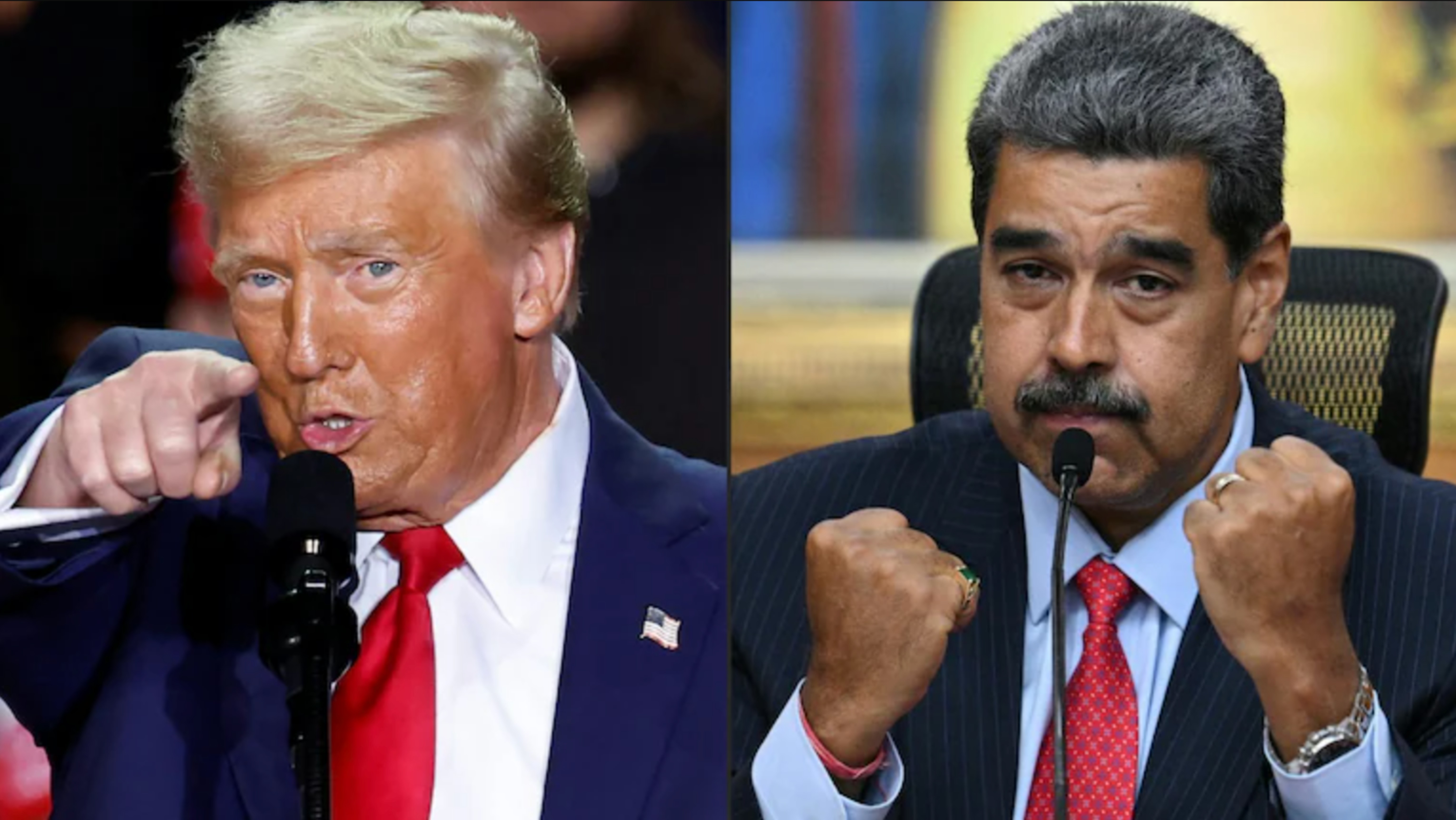
World events rarely shift overnight, but when they do, the consequences ripple far beyond national borders. In early 2026, Venezuela experienced one such rupture. The removal and detention of President Nicolás Maduro marked a decisive break in the country’s political trajectory, reshaping its internal power structures while sending shockwaves through global energy markets and regional geopolitics. What follows is not merely a leadership change, but the opening of an uncertain chapter with profound economic and international implications.
To understand where this resource-rich nation might be headed, it's crucial to understand the current political landscape and then delve into the colossal implications of its most valuable asset, Venezuela's oil reserve. And the question: can this oil transform Venezuela’s future, and reshape global energy dynamics?
A Political Shift: The Power Reset in Venezuela
The capture of Venezuela's president, Nicolás Maduro, along with his wife, during Operation Absolute Resolve, a U.S.-led military action, brought a standstill on January 3rd to the long-standing power struggle. Flown to New York, Maduro pleaded "not guilty" to the federal charges of narco-terrorism and drug trafficking on January 5th.

Delcy Rodríguez, formerly the Vice President, was sworn in as interim president by the Supreme Tribunal of Justice. Venezuela’s military has accepted Rodríguez as interim president for now, but it is still unclear who they will fully support in the long run. While initially in unrest, Rodríguez has extended an invitation for "cooperation" to the United States. Meanwhile, reportedly, the U.S. President has asserted they will effectively "run" the country during a transitional period, aiming to establish a new, stable government.
With all this power shift, there are many questions, like the future of Venezuela as a nation, the residents, its currency, and Venezuela's oil reserves. How will this pan out for the nation, and what effect with this ripple create globally? Let's start with Venezuela's oil and understand the whole thing.
Understanding Oil Reserves: The Hidden Force Shaping the Economy
Oil reserves refer to the amount of crude oil that can be recovered with reasonable certainty under existing economic and operating conditions. They are different from the " oil resources," which might be technically present but not yet economically viable to extract.
These reserves are extremely important because they determine a country’s energy security, economic strength, and role in global oil markets. Nations with vast oil reserves often wield significant influence on the global stage.
Oil Reserves: Venezuela's Underground Riches
Venezuela's modern history is inextricably linked to its vast petroleum reserves. In the early 20th century, the discovery of oil transformed a largely agrarian society into one of South America's wealthiest nations. Venezuela is home to the largest proven oil reserves in the world, with roughly 303 billion barrels of crude, about 17% of global reserves. However, this wealth often fueled political instability, corruption, and an overreliance on a single commodity, leading to what economists call "Dutch Disease."
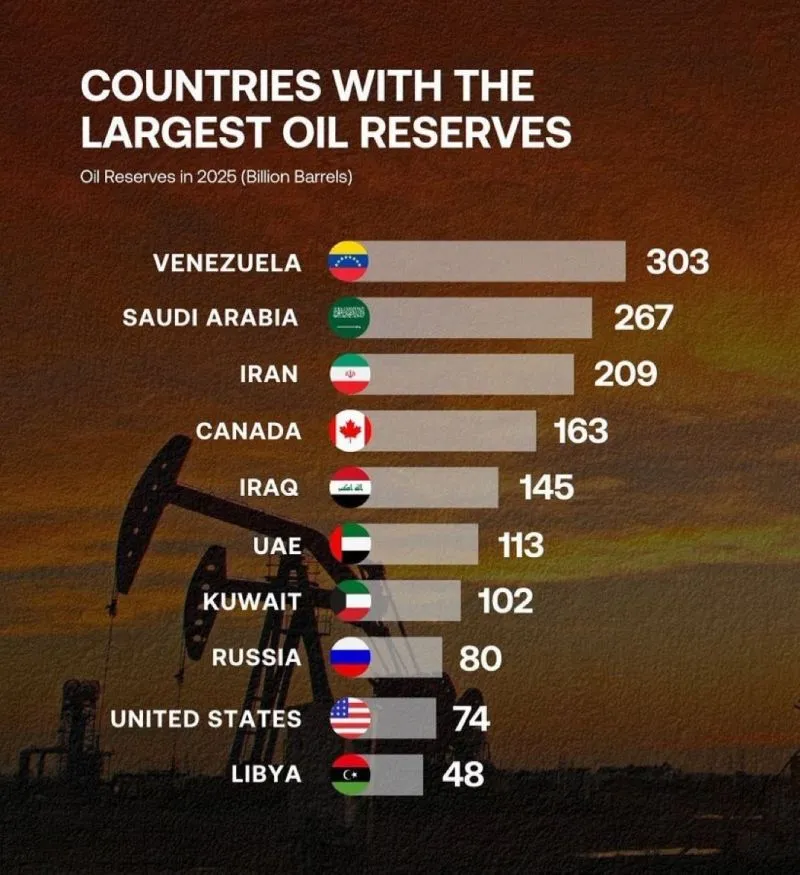
The Venezuela oil reserve is said to surpass traditional powerhouses like Saudi Arabia and Iran. At current oil prices, this reserve base translates to an estimated in-ground value of around $17 trillion, and even more if oil prices rise in future market cycles. But this headline figure can be misleading: it represents the in-ground value of crude, not the net economic benefit once extraction, refining, transportation, and infrastructure costs are accounted for.
Why Venezuela Hasn’t Benefited From Its Oil
Despite its immense reserves, Venezuela’s actual oil production and exports have long been a fraction of its potential. The country now produces barely 1 million barrels per day, which is less than 1% of global output, down from 3.5 million barrels per day in the late 1990s. The reasons are estimated to be:
Decades of underinvestment in oil infrastructure
Sanctions and political isolation that restricted international partnerships
Mismanagement and exodus of technical talent
State control and decay of PDVSA (the state oil company)
Much of the oil is extra-heavy crude, which requires specialized refining and diluents.
As a result, Venezuela reportedly earned only about $4 billion in exports in 2023, a tiny fraction compared with other major producers.
Current Oil Reserve Power Struggle
With Maduro’s removal, the U.S. President announced that the United States would take temporary control of Venezuela’s oil sector and work to revive production, aiming to invest in infrastructure and export Venezuelan crude to global markets.
U.S. oil majors could play an extensive role in production and refining, potentially unlocking more of the country’s energy resources. However, experts reportedly caution:
Reviving Venezuela’s oil sector will take years or possibly a decade or more.
Huge investments are needed for pipelines, refineries, and skilled workforce rebuilding.
Sanctions and legal disputes over assets could slow the process.
The Balance Sheet of a Country: Assets, Power, and Influence
Understanding the "net worth" of a country is more complex than that of an individual or company. It generally refers to the total value of its assets minus its liabilities. Let's see the assets and liabilities
Assets: Natural resources (like oil reserves, land, minerals), infrastructure (roads, ports, power plants), state-owned enterprises, financial reserves (foreign currency, gold), and the human capital of its population. The $17 trillion oil reserve is a significant, albeit mostly unrealized, asset.
Liabilities: National debt (both internal and external), pension obligations, and other financial commitments. Venezuela's external debt alone is estimated at around $200 billion.
While the estimated net worth of the oil reserves is staggering $17 trillion, it represents potential, not liquid cash. It can only be accessed over many decades through extraction, processing, and sale.
The current net worth of Venezuela is severely negative when considering its massive debt, collapsed economy, and degraded infrastructure. The actual task at hand is to transform this potential asset into tangible economic growth and improved living standards, moving from a deeply indebted state to one with a positive, sustainable balance sheet.
The Road Ahead: Opportunities and Risks
Internal Economic Transformation
If sanctions are eased and investment is unlocked, Venezuela could see job creation and foreign capital inflows. Government revenues could diversify beyond oil subsidies. Export earnings could help stabilize the currency and fund social programs. But this success hinges on political stability, transparent governance, and structural reforms, none of which are guaranteed.
Global Oil Market Impacts
In the short term, oil prices may be volatile due to uncertainty, and no immediate production increases are estimated. In the longer term, if Venezuelan exports rise, Global crude supply could expand, putting downward pressure on prices. And the OPEC+ dynamics would shift.
Economic Opportunity or Geopolitical Chessboard?
Control over Venezuelan oil is now both an economic and a geopolitical contest. China and Russia have historically had close ties to Venezuelan energy, and future contracts, especially for heavy crude, could involve multiple geopolitical players.
Global Ripples: Venezuela’s Oil Reserve Role in Other Economies
Countries that rely heavily on oil imports could benefit from a more competitive global oil supply, assuming Venezuela’s production rises and prices soften.
A stable, high-producing Venezuela could alter the balance of power within OPEC (Organization of the Petroleum Exporting Countries) and reduce the dominance of other major producers.
Heavy-oil producers like Canada and Mexico may face intensified competition for refining margins once Venezuelan crude becomes more accessible.
For other oil-exporting nations (e.g., Saudi Arabia, Russia, Nigeria), increased Venezuelan output and potentially lower prices could mean reduced revenues, forcing them to adjust fiscal policies and potentially leading to internal economic challenges.
A revitalized Venezuelan oil industry could shift investments among global oil companies, affect shale oil producers in the U.S. due to price competition, and influence hedging strategies in energy markets.
If Venezuela stabilizes and its economy recovers, millions of Venezuelan migrants might begin to return, straining the host countries' social services and economies, but also creating new challenges for Venezuela in absorbing its returning population.
The debate over sovereignty versus humanitarian intervention will intensify on the international stage, potentially influencing future international law and diplomatic relations.
However, analysts note that significant near-term shifts are unlikely without years of heavy reinvestment and stable governance. The situation in Venezuela is not an isolated event; it sends ripples across the globe, creating a complex "butterfly effect" with far-reaching consequences.
Bottom Line: A Long Road Ahead
The road ahead for Venezuela is fraught with peril and immense opportunity. The $17 trillion in oil reserves represent a powerful engine for recovery, but only if managed transparently, accountably, and with a genuine commitment to the welfare of the Venezuelan people. Transforming underground riches into economic stability, production growth, and global market impact will require massive infrastructure investment, removal of sanctions, political restoration, and international partnerships. Only then could Venezuela hope to leverage its oil reserves not just as a resource, but as a foundation for long-overdue economic growth and regional influence.
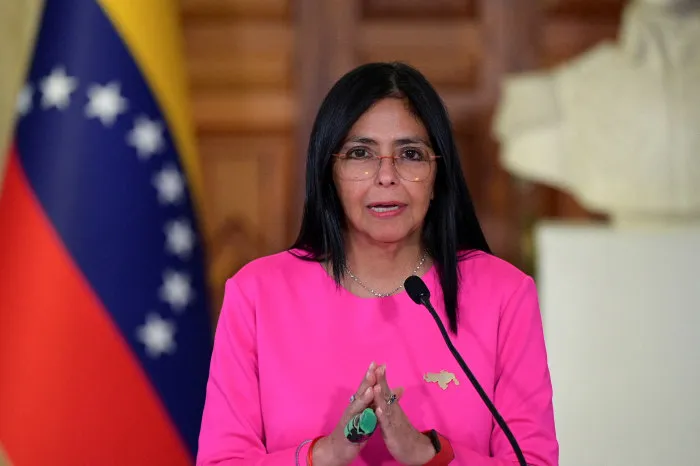
Image: Delcy Rodríguez
The world watches, holding its breath, as this once-wealthy nation attempts to navigate a future radically altered by the events of early 2026. The butterfly has flapped its wings, and the ensuing storm or calm will be felt far beyond the Caribbean shores.
Written By P. Manika (Performist Content Writer)
You may Also Like

Iran-US De-escalation: What It Means for Dubai Businesses, Indian Companies, Real Estate and Travel Recovery in 2026

Samsung Becomes South Korea’s First $1 Trillion Company: How AI, HBM Chips & Galaxy Devices Fueled Its Historic Rise