OpenAI in Trouble? What the AI Power Struggle Means for Businesses Betting on Artificial Intelligence
What the AI Power Struggle Really Means for Businesses Betting Their Future on Artificial Intelligence
For the past year, a single idea has quietly spread through boardrooms, venture capital circles, and policy discussions: OpenAI is trying to become too big to fail.
The theory is simple. Everything OpenAI touches—chatbots, browsers, devices, custom chips, cloud infrastructure, media partnerships, defense contracts, even whispers of social platforms—points toward one strategic goal: deep entanglement. With consumers, enterprises, governments, capital markets, and culture itself.
If artificial intelligence turns out to be less transformative than promised—or simply far more expensive than expected—OpenAI wants to ensure that its failure would be so economically destabilizing that the system would be forced to save it.
This idea was popularized by a widely shared Wall Street Journal investigation asking a once-unthinkable question:
Is OpenAI becoming too big to fail?
For companies building their workflows, products, and strategies on top of AI, this question is not philosophical. It is existential.
The AI Boom: Growth Engine or Economic Mirage?
Economist Tyler Cowen offers the optimistic interpretation. Even if AI investment is overheated, he argues, it still functions as the last great growth engine in a slowing American economy. In that view, Wall Street’s obsession with Nvidia, OpenAI, and hyperscalers isn’t irrational—it’s inevitable.
By contrast, economist Noah Smith recently struck a darker tone, suggesting that the long post-World War II economic after-party is ending. Productivity growth is fragile, institutions are strained, and AI may not be the civilizational reset many hope for.
Both perspectives can be true at once.
What is undeniably true is this:
No one knows whether the trillions being poured into AI infrastructure will ever produce returns proportional to the investment.
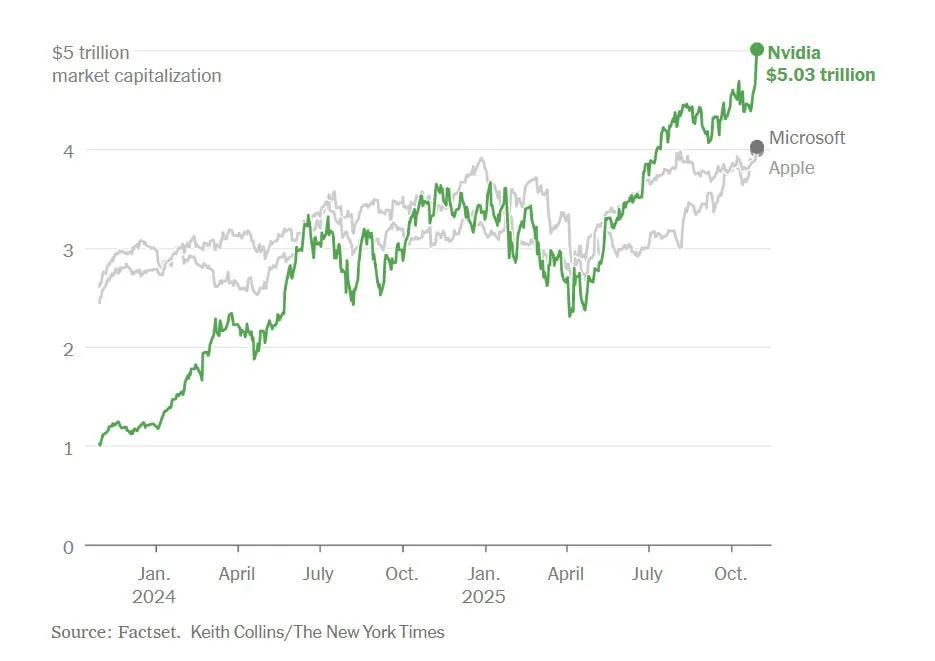
For businesses depending on AI, that uncertainty matters far more than whether AGI arrives in five years or fifty.
Why OpenAI’s Fate Matters to the Entire Economy
OpenAI is no longer “just” an AI lab. It sits at the center of a dense web of dependencies:
Strategic partnerships with Microsoft, Nvidia, Oracle, AMD, Amazon, and Broadcom
Deep exposure to the “Magnificent Seven” tech stocks driving most S&P 500 growth
Expanding government and defense contracts
A reported valuation trajectory toward $500B–$1T
If OpenAI were to stumble, the shock would ripple through capital markets, enterprise software, cloud infrastructure, and government AI strategy.
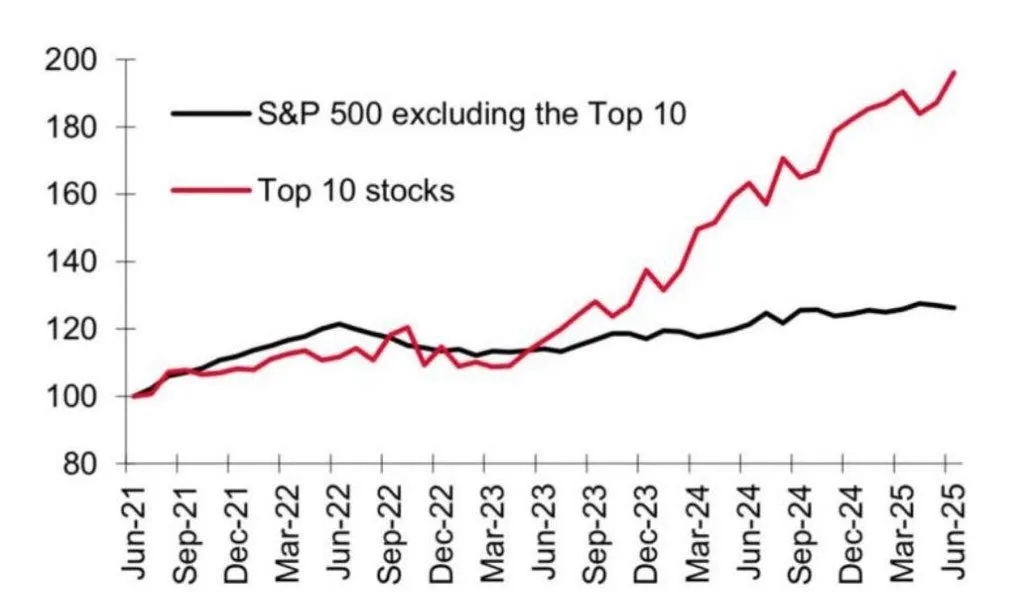
This is the same structural problem regulators faced in 2008. The danger isn’t size alone—it’s interconnectedness.
When institutions become indispensable to the system itself, failure becomes politically unacceptable.
From AGI Mission to Survival Strategy
Publicly, OpenAI still positions itself as an AGI-first organization. Privately, its actions suggest something else:
a company racing to ensure its own survivability in a brutally competitive market.
The story unfolded in phases:
The idealistic nonprofit lab building AGI for humanity
The underfunded pioneer needing massive capital to fulfill its mission
The diversified tech conglomerate monetizing everything to sustain growth
The systemically important entity whose collapse would be too costly to allow
From a business standpoint, this pivot makes sense. But it also exposes OpenAI to risks that many AI-dependent companies underestimate.
Four Reasons OpenAI Is More Vulnerable Than It Looks
1. Google and DeepMind Are Built to Win the Long Game
Despite OpenAI’s brand dominance, Google DeepMind remains the most structurally advantaged AI company on Earth.
Google controls:
Models across every performance and price tier
Search distribution at global scale
Proprietary data
Custom hardware (TPUs)
Cloud infrastructure
Consumer devices
Enterprise software ecosystems
With nearly $100B in quarterly revenue and hundreds of millions of AI users, Google can price aggressively, absorb losses, and outlast competitors.
For businesses, this means one thing:
AI is rapidly commoditizing—and OpenAI does not control the choke points.
2. OpenAI Is Losing the Enterprise AI Market
Enterprise AI—not consumer subscriptions—is where durable, $100B-plus revenue lives.
Recent data shows a major shift:
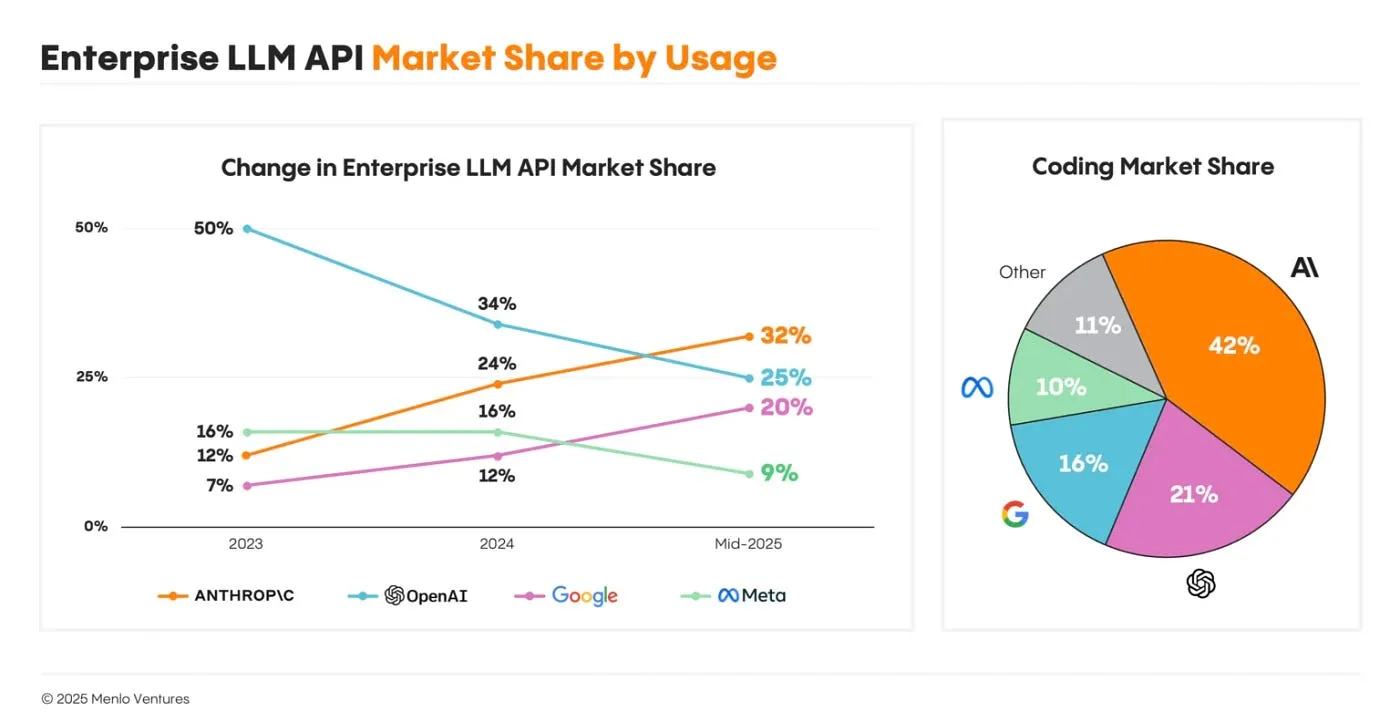
OpenAI’s enterprise market share has dropped from ~50% to ~25%
Anthropic now leads, especially in coding and developer workflows
Google is accelerating fast behind them
Why this matters: enterprises don’t care about hype. They care about reliability, safety, governance, and cost predictability.
If OpenAI loses enterprise dominance, it risks being trapped in a high-cost consumer business with limited pricing power.
For companies betting on AI internally, vendor stability matters more than model benchmarks.
3. Leadership Trust Is Becoming a Strategic Liability
Multiple former OpenAI executives—including co-founders and CTO-level leaders—have publicly questioned Sam Altman’s leadership style, transparency, and governance approach.
For a company asking governments, militaries, and Fortune 500 firms to embed AI deeply into mission-critical systems, trust is not optional.
In contrast:
Anthropic benefits from a safety-first reputation
Google DeepMind benefits from institutional credibility
Markets can forgive losses. They are less forgiving of leadership credibility gaps.
4. The Economics Still Don’t Add Up
OpenAI’s revenue growth is extraordinary—from ~$1B to ~$13B in two years.
But so are its losses.
Reports indicate $12B lost in a single quarter, driven by compute, energy, and infrastructure commitments exceeding $1T over time.
The uncomfortable question investors and executives keep asking is simple:
Does AI revenue scale as fast as AI costs?
So far, the answer remains unclear.
What This Means for Businesses Betting on AI
If your company depends heavily on AI, the takeaway is not “OpenAI will fail.”
The takeaway is more practical—and more urgent:
Avoid single-vendor dependency
Plan for AI commoditization, not monopoly pricing
Treat AI like infrastructure, not magic
Assume consolidation, regulation, and volatility
AI will reshape business—but not evenly, and not without casualties.
OpenAI may survive. It may even be bailed out if it stumbles.
But for companies building on top of AI, blind faith is the real risk.
You may Also Like
The Billion-Dollar AI Battle Behind Silicon Valley
Corporate Cuts and Personal Comebacks: How a pink slip isn’t the end of the road!