NVIDIA Hits $5 Trillion: The AI Giant That Rivaled Economies
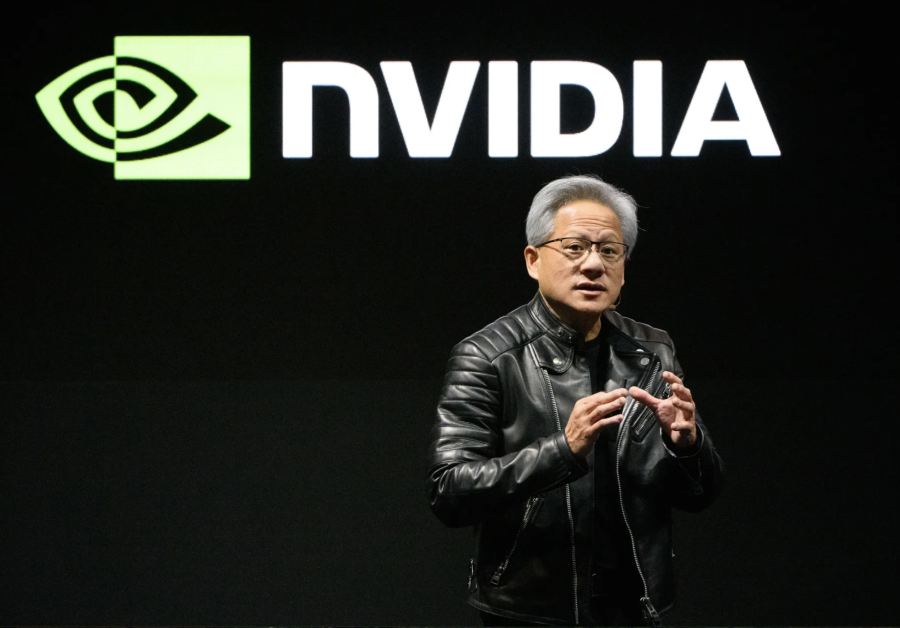
NVIDIA Hits $5 Trillion Market Cap: The AI Giant That Rivals Economies
In a historic market moment, NVIDIA has reached a $5 trillion market capitalization, making it not only one of the most valuable companies in the world but also comparable in scale to the world’s third-largest economy. Just four months after crossing the $4 trillion milestone, the GPU and AI chipmaker continues its meteoric rise — and shows no signs of slowing down.
From $4 Trillion to $5 Trillion in Just Four Months
NVIDIA’s growth trajectory is nothing short of astonishing. The company’s market cap has ballooned by $1 trillion in just 120 days, driven by relentless global demand for its AI chips, data center platforms, and software ecosystem.
The company now accounts for roughly 20% of all S&P 500 gains in 2025, cementing its position as the single most influential driver of U.S. equity market performance this year.
Analysts Still Say “Buy” — Despite Record Highs
Even with NVIDIA shares trading at all-time highs, Wall Street remains overwhelmingly bullish:
73 analysts rate it a Buy
6 say Hold
Only 1 analyst recommends Sell
This vote of confidence underscores a broad belief that NVIDIA’s growth isn’t a speculative AI bubble — it’s backed by real revenue, global demand, and tangible innovation.
“Not an AI Bubble” — People Are Actually Paying
NVIDIA CEO Jensen Huang has consistently argued that this isn’t an “AI bubble.” Unlike the dot-com era, where valuations outran fundamentals, NVIDIA’s surge is tied directly to customer demand.
Enterprises, startups, and global tech giants alike are literally paying billions for NVIDIA’s GPUs and AI infrastructure — the backbone powering generative AI, robotics, autonomous vehicles, telecommunications, and beyond.
Powering the World: Deals, Partnerships, and Global Expansion
Huang’s aggressive partnership strategy continues to expand NVIDIA’s reach across industries and continents. Recent collaborations include:
Nokia – integrating AI infrastructure into telecommunications networks.
Uber – using NVIDIA tech to accelerate AI-driven ride-hailing logistics.
Lucid Motors – leveraging NVIDIA platforms to enhance autonomous driving capabilities.
And the expansion doesn’t stop there. Asian partnerships with Samsung Electronics and Hyundai Motor Company are expected to be announced this week, broadening NVIDIA’s footprint in manufacturing, mobility, and AI innovation.
The China Factor: Growth Without the World’s Biggest Market
Remarkably, NVIDIA’s $5 trillion valuation comes despite being largely blocked from the Chinese market, one of the largest consumers of semiconductors.
Huang has been sidelined due to U.S.-China export restrictions — yet NVIDIA’s growth continues unabated.
There’s cautious optimism, however. With U.S.-China trade talks between Xi Jinping and Donald Trump expected this Thursday, investors are watching closely for any signs that access to China could reopen — potentially unlocking another wave of growth.
Earnings in Focus: Will CapEx Tell the Story?
Tonight’s earnings report will serve as a key proof point for NVIDIA’s continued strength. Major customers — including Alphabet (Google), Microsoft, and Meta — have built their AI infrastructure around NVIDIA’s chips and software stack.
According to Bloomberg Intelligence, Microsoft could increase its capital expenditure by up to 45% in FY26 vs FY25, signaling an ongoing surge in AI infrastructure investment.
From Chipmaker to Economic Powerhouse
At a $5 trillion valuation, NVIDIA’s market cap now rivals entire national economies. To put it in perspective, if NVIDIA were a country, it would be the third-largest economy in the world, trailing only the United States and China.
This comparison isn’t just symbolic — it reflects the company’s influence over global innovation, supply chains, and the future of artificial intelligence.
The Road to $6 Trillion: How Long Will It Take?
Can NVIDIA hit $6 trillion next? If the current pace holds — and AI demand continues to accelerate — analysts suggest it could happen within the next 6 to 12 months.
With new product launches, expanding partnerships, and potential China market re-entry, NVIDIA’s story is far from over.
Employee scale & wealth
NVIDIA employed about 36,000 people worldwide in early 2025 — up from ~29,600 in 2024.
In fiscal year 2023 the company reported 26,196 employees globally, of which 19,532 were in research & development.
Compensation & wealth
The median employee salary at NVIDIA for FY 2025 was around US$301,233.
NVIDIA’s revenues per employee are estimated at ≈US$4.1 million and profits per employee around US$2.1 million.
Reports suggest that a large share of employees, especially long-tenure ones, have become millionaires via stock grants and company growth.
Final Take: The AI Era Has a Face — and It’s NVIDIA
NVIDIA’s rise isn’t just a stock market story; it’s a global technology revolution. As the world builds an AI-driven future — from smart cities to autonomous vehicles — Jensen Huang’s company sits firmly at the center of it all.
Whether or not the market cools, one thing is clear: AI isn’t a bubble when everyone’s buying in
You may Also Like

Iran-US De-escalation: What It Means for Dubai Businesses, Indian Companies, Real Estate and Travel Recovery in 2026

Understanding a Rally Stock: How Triveni surprised Investors