Grand Egyptian Museum (GEM) — $1B museum by the Giza Pyramids | Tickets, exhibits, design & visitor guide
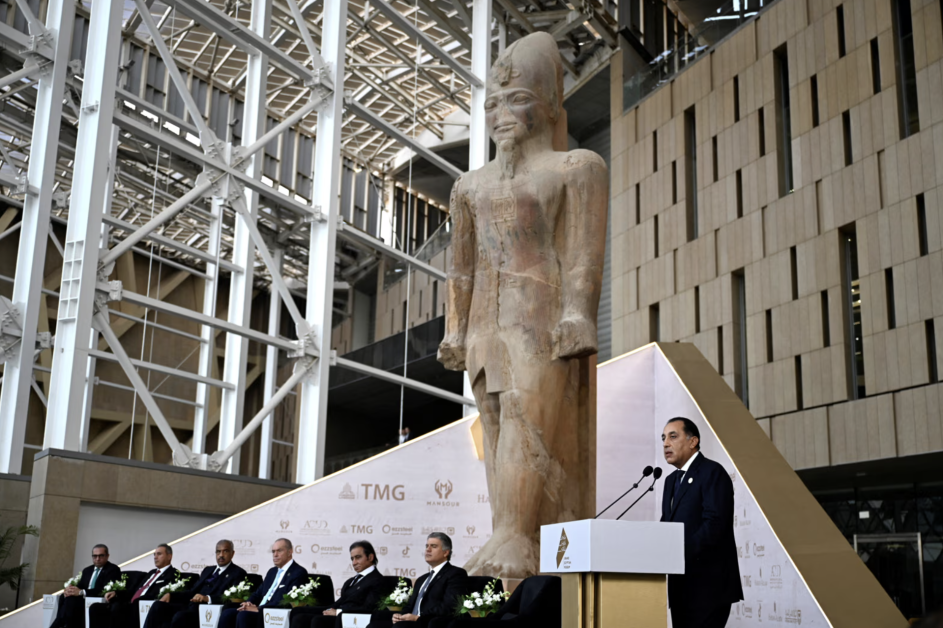
Egypt’s Grand Egyptian Museum (GEM) — a roughly $1 billion national project built beside the Giza Pyramids — has opened to the public as the world’s largest museum devoted to a single civilization. It houses well over 50,000–100,000 artifacts and, critically, the complete Tutankhamun collection displayed together for the first time.
What visitors can see (highlights)
Full Tutankhamun collection — masks, jewelry, chariots and the tomb’s treasures reunited in dedicated halls.
Ramses II colossal statue (the monumental statue greeting the atrium).
Khufu (solar) boat and royal boats exhibition — one of the world’s oldest preserved vessels.
More than a dozen thematic galleries spanning prehistoric Egypt through the pharaonic dynasties and later periods; large temporary-exhibit spaces, children’s museum and a conservation/research center.
Practical visitor info
Distance from airport: about 36 km (≈22 miles) from Cairo International Airport (drive ~30–60 minutes depending on traffic), and just ~2 km from the Giza Plateau/pyramids.
Ticket costs (official & observed pricing): ticket structures vary by nationality/residency/age. Recent published rates show ranges roughly equivalent to:
Local Egyptians: subsidised local rates (examples reported LE175–LE350 tiers).
Foreign visitors (typical publicised adult rate): ≈ $20–$24 / ~LE1,700 for international adult tickets in some recent rate tables; students/children discounted. Always check the GEM official booking page before travel.
Hours & capacity: the museum is managing visitor flow with time-slot booking and daily caps (official statements mention caps around 20,000/day) to protect galleries and visitor experience.
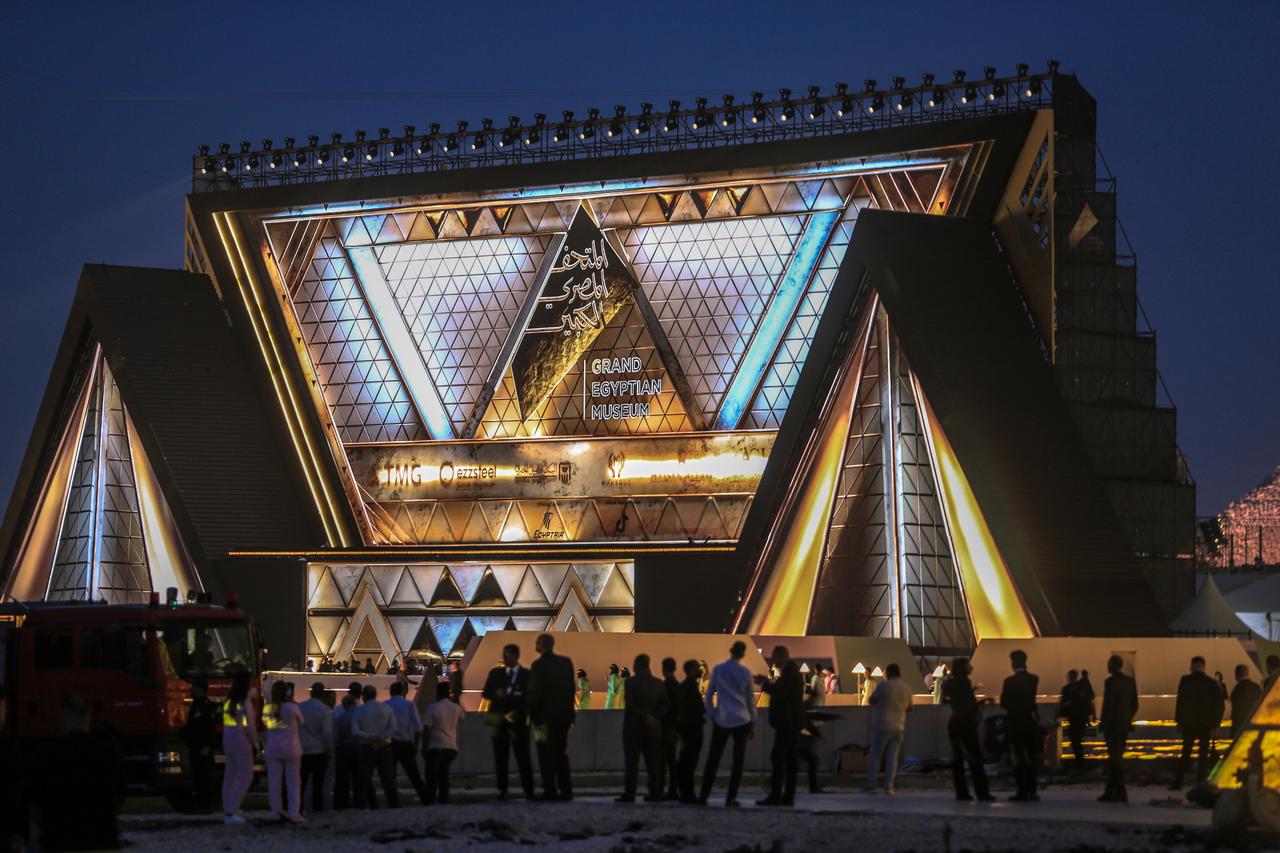
What makes GEM unique (state-of-the-art features)
Scale & focus: billed as the largest museum dedicated to a single civilisation, combining an enormous artifact collection with panoramic views to the Giza Pyramids.
Integrated conservation & research labs on site — conservation-by-design to rehabilitate, restore and study artifacts without shipping them overseas.
Sustainability features: several reports note ambitious energy plans including major solar power use, making GEM among the region’s greener museum projects.
Visitor experience design: designed by Heneghan Peng with engineering/conservation partners (Arup, Buro Happold, Atelier Brückner for exhibitions), focusing on a dramaturgical journey through history and sightlines to the Pyramids.
Digital & broadcast reach for launch: large live-streamed inauguration and digital partnerships (e.g., TikTok deal) to reach global younger audiences.

Who built and runs it
Main contractor / construction JV:Orascom Construction – BESIX joint venture is publicly credited as the lead builder on the final delivery phases.
Design & consulting: Heneghan Peng Architects (design), Buro Happold & Arup (engineering), Atelier Brückner (exhibition masterplan).
Operation / management: GEM is now being operated as a public-private partnership; a Hassan Allam Holding subsidiary (Legacy) was named in project management/operational consortium arrangements in published coverage.
Advertising, PR and who promoted the opening
PR / strategic communications: Brunswick Group provided foundational communications support in the run-up.
Digital partnerships & sponsors: GEM announced strategic digital partnerships (including TikTok) and corporate partners such as Vodafone Egypt and EgyptAir for promotion and sponsorship. Local agencies and national event-production firms handled the inauguration event. Coverage names include MediaHub (local production) and multiple national corporate partners.
Economic meaning for Egypt — jobs, tourism & revenue
Tourism boost: Egyptian officials and international wire reports expect GEM to be a major tourism driver — estimates published in news reports range from ~5 million to 7 million visitors per year once operating at scale. This is cited by ministry/official statements and media outlets.
Direct ticket-revenue estimate (simple, transparent calculation)
To give a conservative, transparent ticket-only revenue estimate (not counting shops, F&B, tours, hotels or wider tourism impact):
Assume 5,000,000 visitors/year (lower published official estimate) and an average ticket ≈ $24 (representative public figure for many foreign adult tickets quoted in recent press).
Calculation: 5,000,000 × $24 = $120,000,000 / year.If GEM attracts 7,000,000 visitors/year (higher estimates): 7,000,000 × $24 = $168,000,000 / year.
So direct ticket revenue likely falls in the range ~$120M–$168M annually, depending on visitor numbers and ticket mix (nationals vs tourists, discounts). (These are ticket-only figures; total economic impact — hotels, restaurants, tours, retail and longer stays — could multiply this many times and feed national tourism revenues, which were reported at $15B+ in recent years and are expected to grow with GEM’s draw).
Note: the $120M–$168M figure is an illustrative arithmetic projection of ticket takings only, not an official revenue guarantee. Wider tourism revenue impacts are harder to isolate but Egyptian authorities project substantial gains to national tourism receipts.
Design, circulation and what’s new compared with other top museums
Purpose-built for conservation at scale: unlike many older national museums that evolved logistically, GEM’s layout includes large conservation labs, climate-controlled display vaults and purpose-built loading/unloading to move large monuments (e.g., Ramses statue, Khufu boat) safely.
Dramatic sightlines to the Pyramids and “Window of Eternity” — intentional framing of the Giza Plateau inside the visit narrative, a design choice that differentiates it from urban museums.
Exhibition dramaturgy led by Atelier Brückner aims for immersive storytelling rather than purely chronological cases — that’s closer to modern blockbuster museums and differs from the older Egyptian Museum in Tahrir.
Safety: is Egypt safe to visit now?
Official travel advice: many governments currently advise travellers to exercise increased caution in Egypt due to regional instability and terrorism risks in specific areas (Northern Sinai and some border zones). For mainstream tourist circuits (Cairo, Giza, Luxor, Aswan) most governments still allow travel with precautions; tourist police and heightened security are in place at major sites. Check your country’s travel advisory before booking.
On the ground: media reporting around the GEM opening emphasises large security operations and heavy protection for the site and visiting delegations; many tourists and organised groups continue to visit Egypt’s main sites. Use licensed guides, registered tour operators and standard safety common sense (avoid demonstrations, follow local advice).
Hotels & amenities near GEM
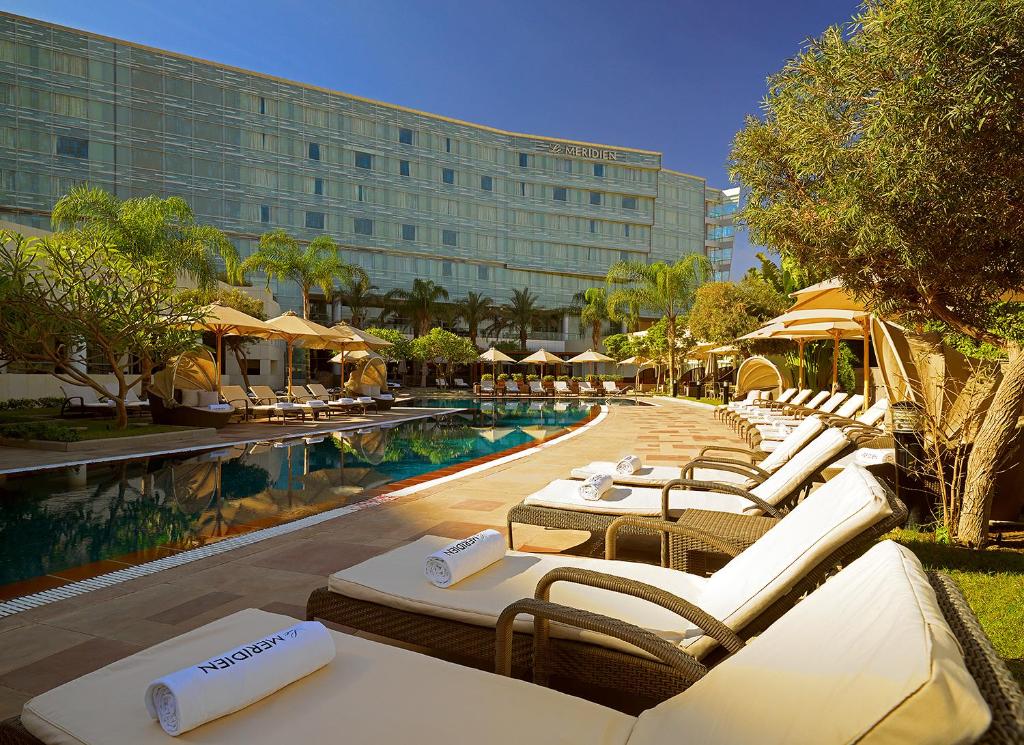
Marriott Mena House (historic luxury with pyramid views), Le Méridien Pyramids Hotel & Spa, Steigenberger/Pyramids area hotels, plus many mid-range and budget “pyramids view” guesthouses. Several new properties and upgraded hotels are marketing GEM proximity. Book well in advance at major events/opening weekends.

Less well-known facts / behind the scenes
GEM’s project governance involved sophisticated digital project controls (PMWeb/Hill International) to manage a hugely complex program of conservation, transport of large artifacts, and international contractors.
The museum’s creation was the result of a global architectural competition (1,557 entries) — Heneghan Peng won the commission in the early 2000s.
The exhibition masterplan and museology work included major European firms (Atelier Brückner) to design the narrative flow and object presentation — an intentional international collaboration to combine local artifacts with global best practice.
International reception at inauguration
The inauguration drew global attention — heads of state, royals and delegations attended, and international media framed the opening as a major cultural and economic milestone for Egypt. Coverage highlighted both the cultural significance of reconsolidating Tutankhamun’s treasures and the event’s diplomatic symbolism. Reactions were broadly positive in global press; commentators noted the scale and spectacle as well as the long project history.
You may Also Like

Samsung Becomes South Korea’s First $1 Trillion Company: How AI, HBM Chips & Galaxy Devices Fueled Its Historic Rise
Iran-US De-escalation: What It Means for Dubai Businesses, Indian Companies, Real Estate and Travel Recovery in 2026