BlackBerry Didn’t Die: How It Beat Apple in Car Software

BlackBerry Didn’t Die — It Outpaced Apple in the Car of Tomorrow
For much of the last decade, BlackBerry was the punchline of tech history. Once the iconic maker of business smartphones, it famously lost the mobile war to Apple’s iPhone and Google’s Android. But while the world was chuckling at BlackBerry’s demise, a quiet pivot was taking place — one that has transformed the company into an unlikely gatekeeper of the future of mobility.
Today, the operating systems of hundreds of millions of new cars — global best-selling vehicles from the world’s biggest automakers — run software that originated in BlackBerry labs. Meanwhile, Apple’s heavily hyped automotive ambitions have been shelved after more than a decade and a reported $10 billion in investment.
The Forgotten Giant Inside Your Dashboard
Apple’s success with the iPhone permanently relegated BlackBerry to footnotes in smartphone history. But the company had quietly owned another world: embedded operating systems for mission-critical devices. That legacy lives on most vividly in QNX, a real-time operating system BlackBerry acquired years before its pivot.
Today, QNX is far from niche. BlackBerry’s latest press announcement reports its software is embedded in over 275 million vehicles worldwide — a staggering footprint in a market where annual global vehicle production is roughly 80–90 million units.
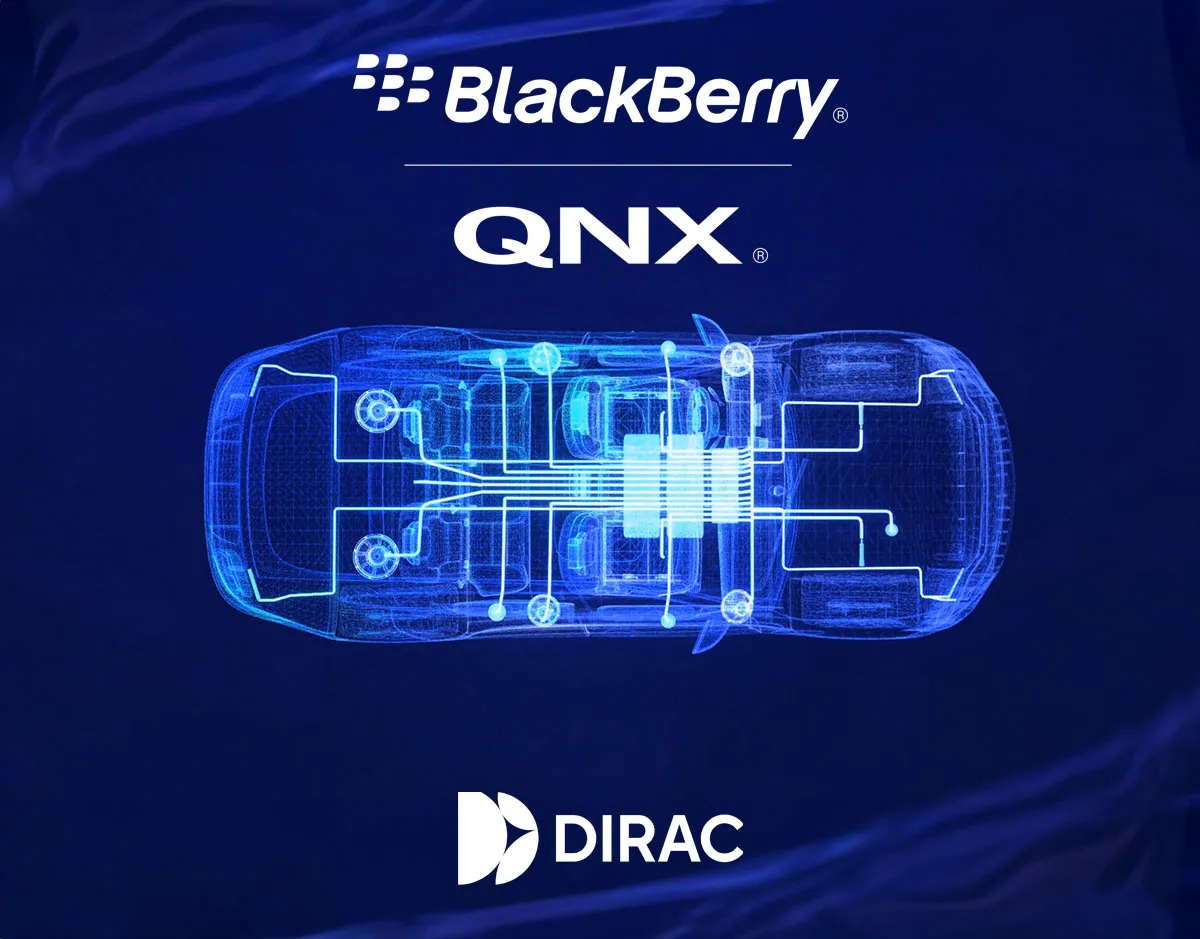
The QNX platform is not limited to radio or navigation screens:
Infotainment and digital cockpits
Advanced driver assistance and safety systems
Domain controllers for software-defined vehicles
These aren’t features reserved for bargain-basement cars. QNX runs inside vehicles from BMW, Mercedes-Benz, Toyota, Ford and many others.
BlackBerry’s strategic shift from hardware to software wasn’t just astute — it was prescient. In a world where vehicle value increasingly lies in code, not sheet metal, the company’s embedded software business now delivers high gross margins and recurring royalties per vehicle shipped. While BlackBerry doesn’t disclose detailed automotive financials, investor reporting indicates steady growth and solid profitability in its QNX segment.
Apple’s Titan: A $10 Billion Misstep
If BlackBerry’s rise seems unexpected, Apple’s retreat from automotive feels seismic.
For more than a decade, Apple poured resources — reportedly more than $10 billion — into an ambitious electric and autonomous vehicle initiative known internally as Project Titan.
Launched mid-2010s, Titan had phases that included:
Recruiting automotive and silicon veterans from Porsche and NASA
Testing autonomous vehicles on California roads
Exploring CarPlay integration far beyond simple infotainment
Yet by early 2024 the company abruptly canceled the project, moving engineers and capital into generative AI and other internal endeavors.
Apple’s ambition — to build an iPhone-equivalent in the automotive space — stumbled on realities that catch many tech giants off guard: automotive software isn’t just another user interface. Safety certification, integration with complex hardware, and deeply embedded control systems make car software orders of magnitude more challenging than phone OS tweaks.
Why Software in Cars Isn’t Another CarPlay
Even Apple’s attempts to expand CarPlay — its dashboard interface software — into more of the vehicle’s core systems hit resistance from automakers. OEMs are reluctant to cede control of core vehicle functions and user experiences to a third party, even one with Apple’s pull. This highlights a key difference between consumer electronics and automotive: control over safety and brand experience matters deeply.
BlackBerry’s QNX, by contrast, is deeply embedded in safety-critical and regulatory-certified electronic control units (ECUs). These are not garnishes on existing hardware — they are part of the architecture that keeps a vehicle running safely.
What Others Learned Too Late
Apple wasn’t alone. Legacy automakers have also struggled to build scalable software stacks in-house.
Volkswagen’s internal software unit, CARIAD, has been a cautionary tale of corporate ambition colliding with execution reality. After years of massive spending, structural challenges and delayed deliveries, VW restructured its approach — including partnerships with external software platforms like Rivian and Xpeng — rather than rely solely on in-house tools.
This struggle illustrates a broader industrial lesson: developing automotive software cannot simply be inherited from smartphone sector playbooks. The complexity of safety-certified systems and the deep integration with vehicle hardware creates a moat that is hard to cross without decades of domain expertise.
From Obsolete to Indispensable
BlackBerry’s evolution from handset maker to embedded software stalwart is a rare corporate renaissance.
Hardware margins gave way to software royalties. QNX’s revenue model — licensing per vehicle — brings recurring income with high profitability that hardware never delivered.
Brand perception shifted quietly. The company went from “obsolete phone maker” to indispensable part of the automotive value chain.
Market relevance surged. QNX now sits at the core of tens of millions of the world’s newest cars — and nearly every major manufacturer needs it in the age of software-defined vehicles.
The irony is not lost on industry strategists: a company laughed out of one market quietly became a backbone in another — even as the biggest names in tech invested billions chasing a dream that never took shape.
The Road Ahead
The future of automotive software is still unfolding. OEMs are wrestling with how to balance third-party platforms, open-source tools, and proprietary development. BlackBerry’s entrenched position gives it a valuable vantage point, but competitors are emerging as vehicles become ever more connected and autonomous.

Image: CEO John Chen
Apple’s exit from Titan doesn’t mean the company is done with cars. It does, however, underscore the scale and difficulty of the challenge. In contrast, BlackBerry’s decades-long commitment to embedded systems has yielded a footprint few outside the automotive industry suspected.
Drivers may laugh about BlackBerry phones — but millions of them are quite literally driving with BlackBerry code under their dashboards.
You may Also Like

Corporate Cuts and Personal Comebacks: How a pink slip isn’t the end of the road!

Iran-US De-escalation: What It Means for Dubai Businesses, Indian Companies, Real Estate and Travel Recovery in 2026