Why Anduril Industries Could Become the Most Powerful Defense Tech Company in the World
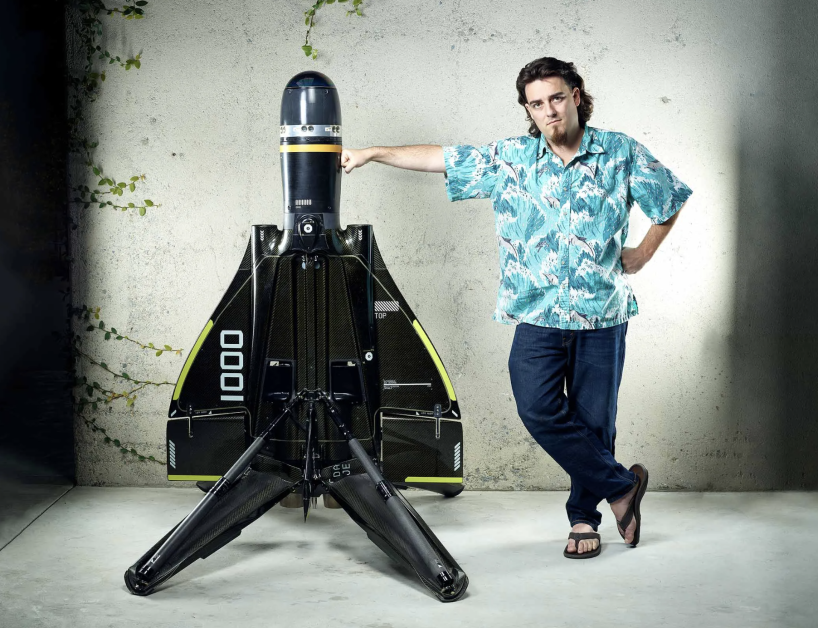
The Quiet Rise of Anduril: Why This Defense Startup Could Become One of the Most Important Companies in the World
In the global technology landscape, the loudest companies often dominate headlines—social media giants, consumer tech titans, and AI startups chasing viral attention. Yet one company is quietly building technology that could shape the next century of geopolitics and global security.
That company is Anduril Industries.
Founded in 2017 by Palmer Luckey—the entrepreneur who previously created Oculus VR and sold it to Meta Platforms for $2 billion—Anduril is now emerging as one of the most consequential defense technology companies in the world.
Recently, the United States Army signed a 10-year enterprise agreement worth up to $20 billion, consolidating more than 120 separate procurement contracts for Anduril’s technology into a single framework.
For a startup less than a decade old, this kind of contract signals something extraordinary: the transformation of warfare itself—from hardware-heavy systems to software-driven autonomous defense networks.
But the real story of Anduril is bigger than military contracts. It is about how AI, robotics, and sensor networks may reshape not just wars—but disasters, borders, and even the ethical boundaries of machine intelligence.
And at the center of it all is a paradox: the same technology that could stabilize global security could also pose existential risks if mishandled.
The Philosophy Behind Anduril: Software Is the New Arsenal
Traditional defense companies such as Lockheed Martin, Raytheon, and Northrop Grumman built their empires on massive hardware systems—fighter jets, missiles, submarines.
Anduril is trying to invert that model.
Instead of focusing primarily on platforms, the company’s core product is software—particularly its AI-powered command-and-control system known as Lattice.
Lattice integrates data from sensors, drones, towers, satellites, and vehicles into a unified operational picture. The system can:
Detect intrusions using computer vision
Track drones and vehicles autonomously
Coordinate swarms of unmanned systems
Provide real-time battlefield intelligence
This approach reflects a broader shift in modern warfare: data and autonomy matter as much as physical weapons.
The battlefield of the future will not just be defined by tanks and jets, but by algorithmic decision-making, AI-assisted operations, and networked sensors.
Building the “Operating System” of the Battlefield
Many analysts now describe Anduril’s ambition as building something akin to a military operating system.
The company produces a growing ecosystem of hardware that plugs into this platform.
Among its most notable systems:
Autonomous Drones
The company develops autonomous aircraft such as the Ghost surveillance drone, capable of quiet reconnaissance and AI-assisted targeting.
Counter-Drone Interceptors
The Anvil interceptor drone can identify and destroy hostile drones using computer vision and autonomous flight.
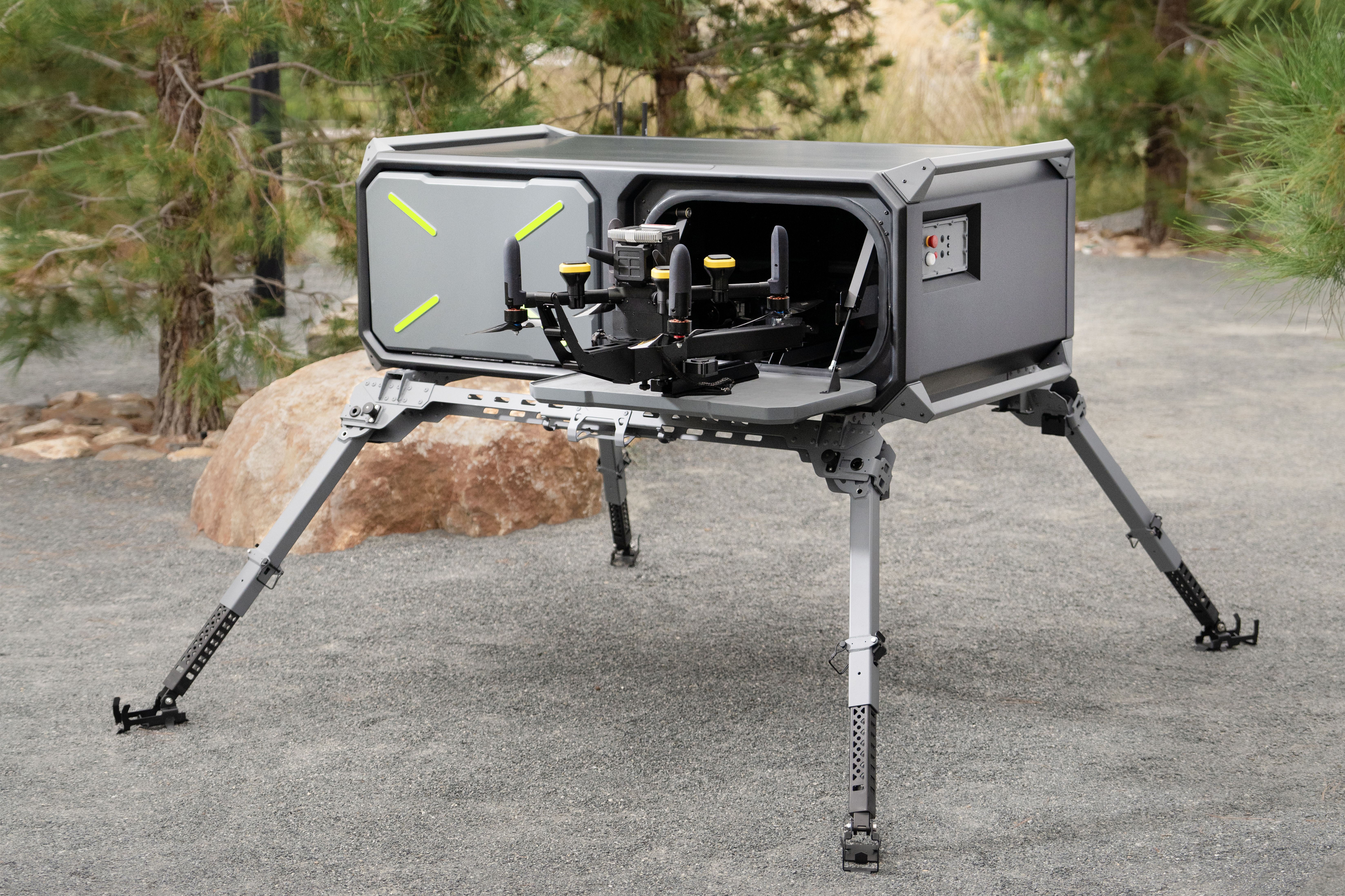
Anvil-M Munition Variant Of Interceptor Platform
Drone Swarms
Anduril’s Altius drones can be launched from aircraft or ground vehicles and operate in coordinated swarms over long distances.
AI Battlefield Systems
The company’s software links all these systems into a single command architecture.
In practice, this means a soldier could control dozens—or even hundreds—of robotic systems simultaneously.
This is what Luckey once described as turning soldiers into “technomancers.”
Why Silicon Valley Is Entering Defense Again
For years, Silicon Valley avoided military work due to ethical debates about AI weapons.
But geopolitical realities have changed that calculus.
Rising tensions between major powers, cyber warfare, drone conflicts, and the rapid militarization of AI have pushed governments to seek innovation from the tech sector.
As a result, companies like:
OpenAI
Palantir Technologies
Meta Platforms
are increasingly collaborating with defense programs.
Anduril sits at the center of this shift.
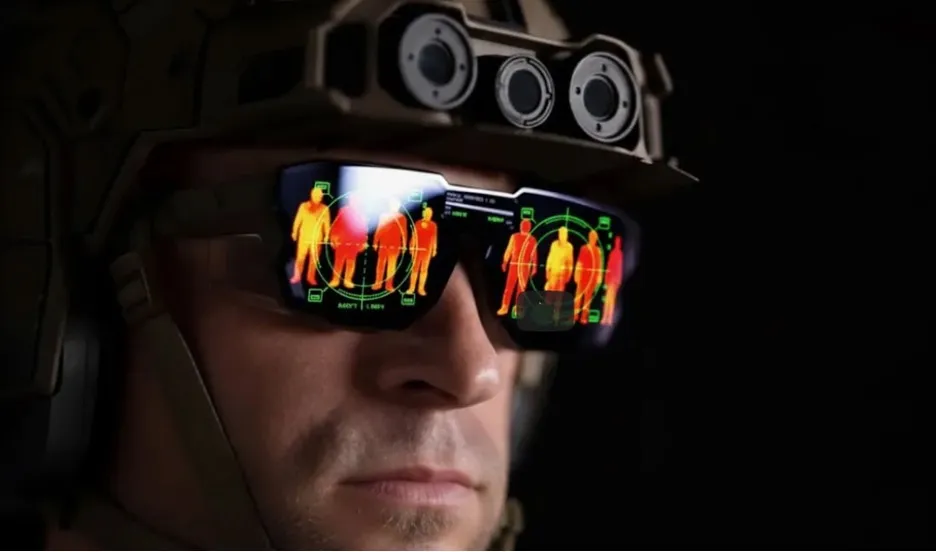
The company has partnered with Meta to develop mixed-reality battlefield systems that give soldiers real-time information overlays, drone control, and AI-assisted targeting through wearable displays.
These systems transform the soldier from a standalone operator into a node within a digital battlefield network.
Why Anduril Is Outpacing Traditional Defense Giants
One of the most striking aspects of Anduril’s rise is its speed.
Legacy defense companies often operate under “cost-plus” contracts that reward long development cycles.
Anduril operates more like a Silicon Valley startup.
Key differences include:
Rapid Iteration
The company prototypes systems quickly, tests them in real-world environments, and iterates rapidly.
Software-First Architecture
Updates to AI software can be deployed in hours rather than months.
Lower-Cost Systems
Many of its drones are intentionally designed to be cheap and expendable, allowing swarms to overwhelm traditional defenses.
Integrated Platforms
Rather than selling individual weapons, Anduril sells entire autonomous ecosystems.
This approach is why militaries increasingly see startups as partners in the next phase of defense innovation.
Defense Technology Beyond War
Despite its focus on military applications, many of Anduril’s technologies have broader potential.

Sensor networks and AI monitoring systems can also help address civilian challenges.
Possible uses include:
Disaster Response
Autonomous drones could locate survivors after earthquakes, floods, or hurricanes.
Wildfire Detection
AI-powered sensor towers could detect fires before they spread uncontrollably.
Border and Infrastructure Security
Computer vision systems could monitor pipelines, ports, and power grids.
Anti-Trafficking Operations
Sensor networks can help detect smuggling routes and illegal crossings.
Investors believe these dual-use technologies could transform Anduril from a defense contractor into a global security platform.
The Scariest Question: What If Autonomous Weapons Become Too Smart?
The rise of AI-powered defense systems inevitably raises an unsettling question:

What happens if military AI becomes too autonomous?
A fully sentient military machine is still science fiction—but the trajectory of AI development makes the debate unavoidable.
Autonomous systems already:
Identify targets
Navigate complex environments
Coordinate with other machines
As these capabilities grow, concerns emerge about AI decision-making in lethal scenarios.
Critics warn about:
Autonomous weapons escalating conflicts
AI making mistakes without human oversight
Algorithms being hacked or manipulated
These concerns have led to calls for international regulation of “killer robots.”
What Palmer Luckey Says About Preventing AI Catastrophe
Palmer Luckey has addressed these fears directly.
His argument is controversial but simple:
If democratic countries don’t build advanced defense AI, authoritarian regimes will.
Luckey believes responsible nations must lead the development of military AI to ensure it is used with human oversight and ethical constraints.
Several safeguards are typically built into modern defense AI systems:
Human-in-the-loop control
Autonomous systems often require human authorization for lethal actions.
Restricted autonomy
Many AI systems are limited to navigation, detection, or targeting assistance.
Auditable decision systems
Software logs allow analysts to review how AI systems reached decisions.
Controlled deployment
Sensitive technologies are deployed gradually and tested extensively.
Even so, the debate around military AI remains one of the most serious ethical discussions in modern technology.
Why Anduril’s Quiet Strategy Might Be Its Biggest Advantage
Unlike many Silicon Valley startups, Anduril rarely chases consumer hype.
Its customers are governments, not app users.
Its products are tested in real-world operations, not just demonstrations.
This quiet focus has allowed the company to steadily secure contracts and expand capabilities without the volatility of public attention.
Today the company generates billions in revenue and continues to grow rapidly.
The Future: A New Kind of Defense Company
If Anduril succeeds in its vision, it could become something unprecedented:
A company that builds the autonomous infrastructure of global security.
Its systems may eventually:
Coordinate drone fleets
Monitor borders and oceans
Assist soldiers in combat
Respond to natural disasters
Protect infrastructure
But the implications go even further.
The same technologies that help stabilize the world could also redefine how wars are fought.
And in that sense, Anduril is not just building weapons.
It is building the software layer of modern geopolitics.
By Tommy Thounaojam- Editor Micromunch
You may Also Like

Taking a bigger bite out of the apple: John Ternus

Trump’s China Visit 2026: Xi Summit, AI Talks, Taiwan Tensions and Top CEOs in Beijing