US Halts Immigration Applications from 19 Countries — Full List & Impact (2025)
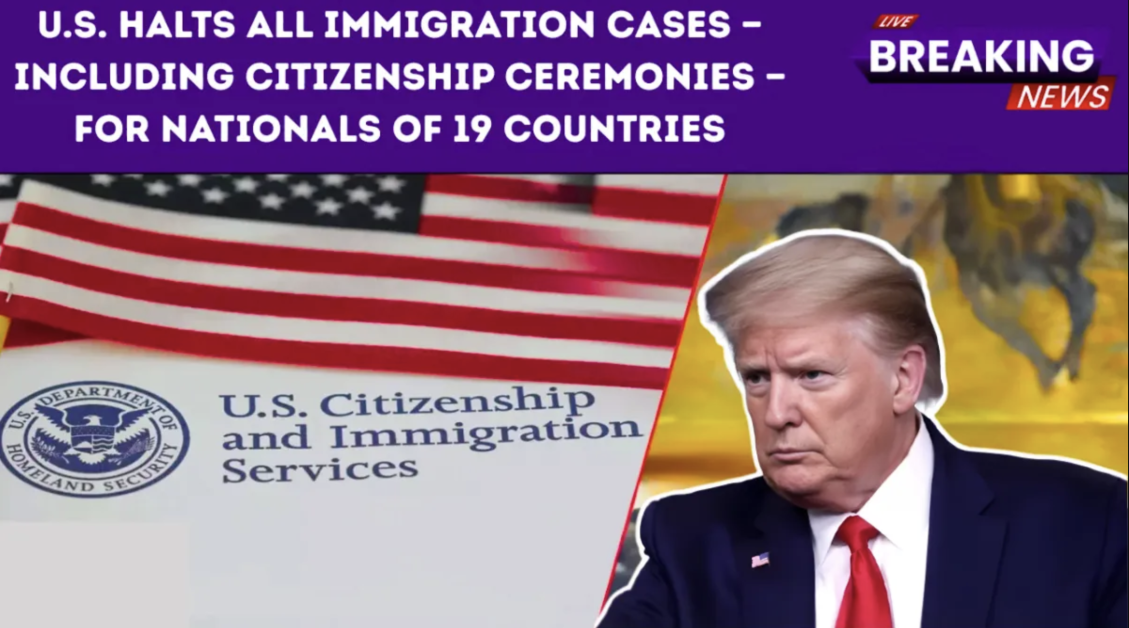
On December 2, 2025, U.S. Citizenship and Immigration Services (USCIS) announced a pause on all immigration applications — including green cards, naturalization, asylum claims, and other visa benefits — for nationals of 19 non-European countries.
The suspension applies to both new and pending cases, and extends in many cases to applicants whose approvals were already underway. This pause builds on a previous partial travel-ban policy implemented in June 2025 by the current administration.
USCIS described the freeze as a response to national security and public safety concerns, citing a recent violent incident in Washington, D.C. (a shooting involving an Afghan national) as justification for the move.
Countries Affected — Full List
The 19 countries under the immigration application pause are divided into two categories based on prior restrictions.
| Fully Restricted (Full Ban) | Partially Restricted |
|---|---|
| Afghanistan | Burundi |
| Myanmar (Burma) | Cuba |
| Chad | Laos |
| Republic of the Congo | Sierra Leone |
| Equatorial Guinea | Togo |
| Eritrea | Turkmenistan |
| Haiti | Venezuela |
| Iran | |
| Libya | |
| Somalia | |
| Sudan | |
| Yemen |
That means nationals from all 19 countries — regardless of whether they’re applying for a visa, green card, asylum, or citizenship — are affected under the new policy.
What Is on Hold / Under Review
1. All pending and new applications for green-cards, visas, citizenship, asylum — for individuals from the 19 countries.
2. Even some previously approved cases are subject to “re-review,” including possible re-interviews and fresh background checks.
3. The pause applies regardless of when applicants arrived in the U.S., including those already living in the country, or whose visas were already approved.
According to USCIS, the review aims to ascertain if any applicant poses a potential threat to national security or public safety.
Why — Official Reasoning & Justification
a. The freeze was triggered by a shooting in Washington, D.C., allegedly carried out by an Afghan national who previously received asylum. The administration argues that the existing vetting procedures failed in this instance.
b. The 19 affected countries were identified earlier (June 2025) in a proclamation asserting that many have “deficient vetting and screening systems,” high visa-overstay rates, poor information-sharing with the U.S., or insufficient cooperation in accepting deportations.
c. The new policy is described by officials as an effort to “prioritize national security and public safety” while overhauling immigration-benefit adjudication and vetting practices.
Reactions, Criticism & Legal Concerns
1. Critics — including immigrant-rights organizations and some lawmakers — describe the pause as broad, punitive, and discriminatory, arguing it targets individuals based solely on nationality rather than individual risk.
2. Some applicants reportedly saw citizenship ceremonies canceled at the last minute.
3. Legal experts warn that the policy may face constitutional challenges, emphasizing that it undermines due process and could violate equal-protection principles.
4. Supporters argue that the policy is a necessary — though harsh — measure amid rising concerns of national security, visa overstays, and the potential misuse of legal immigration channels.
Implications for Immigrants and Former Refugees

a. Individuals from affected countries with pending applications should expect delays, cancellations, or requests for additional documentation or interviews.
b. Those who were already in the U.S. — even with valid visas or green cards — might face review, legal uncertainty, and in some cases, removal of benefits.
c. Legal counsel and immigrant-rights support organizations may become vital for those seeking recourse or clarification.
d. For many, the pause introduces uncertainty about family reunification, resettlement plans, and long-term immigrant status, especially if visa or asylum status was in limbo.
Context: How This Fits Broader U.S. Immigration Policy
The freeze represents a substantial shift from earlier U.S. immigration policy, which had emphasized border enforcement and deportation — now extending to legal immigration processing.
The 19-country list stems from a previously issued presidential proclamation (June 2025) aimed at restricting entry from countries whose citizens were considered high-risk because of weak vetting systems or high overstay rates.
The shift suggests a broader policy trajectory: re-defining “permissible” immigration, increasing scrutiny on legal immigration routes, and using national security as justification for sweeping restrictions.
You may Also Like

Corporate Cuts and Personal Comebacks: How a pink slip isn’t the end of the road!

The Rise of Gautam Adani: How the Adani Empire Grew So Fast