The Rise of Contentpreneurs: India’s Creator Economy Boom

The creator economy in India has rapidly matured from a side hustle phenomenon to a strategic business ecosystem with trillions of dollars in economic influence. What began as informal content creation has evolved into a structured, data-backed engine of consumer influence, commerce, and brand growth. For corporate leaders, marketers, and investors, ignoring this seismic shift could mean missing out on one of the most transformative forces in the digital economy.
1. A Macro Trend: Scale, Influence, and Economic Clout
According to the Boston Consulting Group (BCG) report From Content to Commerce: Mapping India’s Creator Economy:
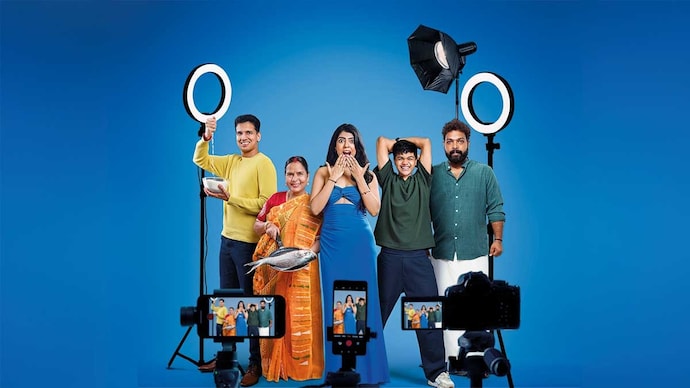
India is home to 2–2.5 million monetised digital creators—individuals with at least 1,000 followers—who are actively shaping digital purchase behavior.
These creators currently influence USD 350–400 billion in annual consumer spending, accounting for 30%+ of purchase decisions across categories such as fashion, beauty, electronics, and daily essentials.
By 2030, creator-led influence on consumer spending is projected to exceed USD 1 trillion annually—an extraordinary ten-fold leap in economic leverage over less than a decade.
This data points to the transformation of creators from peripheral marketing partners to core demand drivers shaping how millions discover, evaluate and buy products.
2. Monetisation: From Passion Projects to Professional Pursuits
While macro statistics tell the broader market story, the monetisation landscape reveals internal dynamics:
Direct revenue generated by creators is estimated at USD 20–25 billion today, projected to grow to USD 100–125 billion by 2030.
Despite this surge, only about 8–10% of the 2–2.5 million creators currently monetise their content effectively—a sign of untapped commercial potential.
This indicates a monetisation gap: while influence and demand are robust, structured revenue streams are still developing—especially outside top-tier talent.
For brands, this gap represents both a challenge and an opportunity: partners who help creators unlock recurring revenue (e.g., commerce integrations, affiliate programs, membership models) can secure deeper, long-term relationships.
3. Professionalisation: Creator Income and Tiered Ecosystems
As the ecosystem matures, income demographics among creators are stratifying:
Macro and mega creators in India—those with significant followers—now earn ₹20 lakh to ₹1.5 crore annually, while top global influencers scale much higher (often in double-digit crores).
At the same time, a large segment of smaller creators continues to struggle with inconsistent earnings and platform dependency. Industry commentary underscores that only a small percentage of creators reach sustainable earnings, even as overall brand spend grows.
This professionalisation reflects a hierarchical creator economy where audience, content quality, and monetisation tools determine income tiers—similar to traditional entertainment but with exponentially broader access.
4. Platform Dynamics and Commerce Integration
Platforms are rapidly evolving to integrate creators into commerce models:
YouTube’s Shopping Affiliate Program in India has seen 40%+ of eligible creators enrolled, enabling direct product tagging and affiliate revenue generation.
Short-form video formats on platforms like Instagram Reels, YouTube Shorts, and Moj dominate engagement, driving rapid discovery and impulse purchases—critical drivers of the creator-commerce loop.
This blurring of content, community, and commerce suggests that creator ecosystems are no longer just promotional channels but increasingly serve as full-funnel demand engines.
5. Changing Consumer Behaviour & Brand Strategy Implications
Consumers—especially Gen Z and millennial shoppers—are demonstrating a clear shift:

Over 60% of consumers report regular exposure to content from creators, and more than 30% attribute their purchase decisions to creators they follow.
This signals a trust-based shift away from traditional top-down advertising toward community and creator-driven discovery.
For brands, this mandates a reevaluation of traditional media mixes, moving toward earned and shared attention models anchored in creator ecosystems.
6. Strategic Priorities for Brands and Businesses
Given this dynamic environment, brands need to rethink their approach:
A. Treat Creators as Strategic Partners
Brands must move beyond transactional influencer campaigns toward long-term creator partnerships that:
Co-create content tailored to niche audience segments
Link creator output directly to commerce outcomes
Offer transparent measurement and shared performance incentives
BCG explicitly highlights the need for this shift to capture future growth.
B. Invest in Measurement & ROI Frameworks
Traditional marketing KPIs (reach and impressions) fall short of evaluating creator impact. Brands must adopt commerce-linked metrics such as:
Conversion rates from creator links/affiliates
Repeat purchase lift among creator audiences
Incremental revenue attributable to creator activations
This is essential for marketing accountability in boardroom discussions and long-term budget planning.
C. Leverage Regional and Community Creators
India’s creator economy is increasingly regional and linguistically diverse. Local language creators command deep trust—especially outside metros—and drive conversions in Tier 2/3 markets. Investing in regional creator clusters can unlock higher engagement and deeper market penetration.
7. Risks and Real-World Constraints
Despite impressive projections, certain challenges persist:
Only a small fraction of creators earn sustainable revenue, pointing to a monetisation bottleneck.
Some markets show income disparities where high earnings are concentrated among top creators, while most depend on sporadic brand deals.
Algorithmic volatility and platform dependency pose risk to creator earnings sustainability and influencer reliability.
These caveats underline the need for brand due diligence and diversified creator strategies that do not over-rely on any single platform mechanic.
Conclusion: From Side Hustle to Strategic Growth Lever
India’s creator economy is no longer experimental—it’s foundational. With **millions of creators shaping hundreds of billions in consumer spending today and potentially trillions by 2030, the market opportunity is too large for brands to treat as peripheral.
For business leaders, the implications are clear:
Creators are emerging as a new distribution layer connecting brands to buying audiences.
Commerce and content are converging, demanding new metrics, budgets, and strategic frameworks.
Long-term creator partnerships will be a differentiator for brands seeking sustainable growth in the digital economy.
In this new paradigm, the question for brands is no longer whether to engage creators—but how strategically and systematically they do so.
By [Tommy Thounaojam] Editor Micromunch