Sanae Takaichi: Japan’s First Female Prime Minister and the Dawn of a New Economic Era
Background & Personal Story
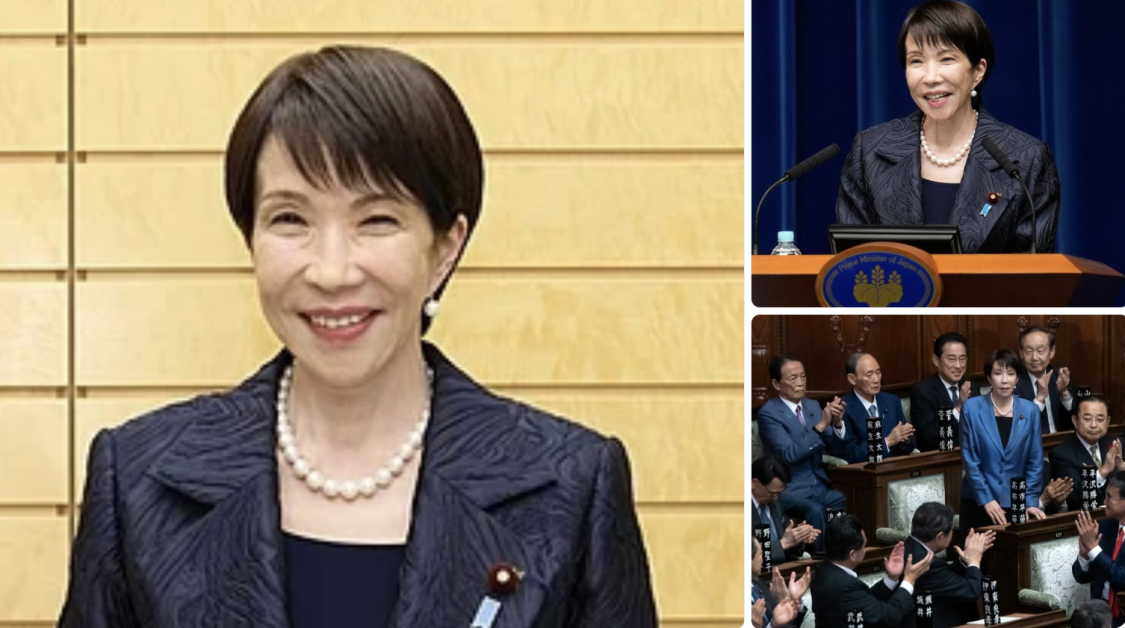
Takaichi was born on March 7, 1961 in Yamatokōriyama, Nara Prefecture. Her father worked in the automotive industry and her mother served in the Nara police force.
She studied business administration at Kobe University, commuting long-hours in her earlier years. Prior to entering electoral politics, she worked as a legislative aide, broadcaster, and also had a stint in the U.S. as a congressional-fellow in 1987.
Her youth included unconventional hobbies for a Japanese female politician: she played drums in a heavy-metal band, rode motorcycles and scuba-dived.
Politically, she first ran as an independent in 1992 and won a seat in the House of Representatives in 1993, and joined the governing Liberal Democratic Party (LDP) in 1996.
Over decades she held key roles: Minister for Internal Affairs and Communications, Minister of State for Economic Security, among other senior posts.
Her personal life: she married fellow politician Taku Yamamoto in 2004, divorced in 2017 and remarried him in 2021; Yamamoto suffered a cerebral infarction in 2025 and Takaichi also acts as his carer.
Political & Business Background
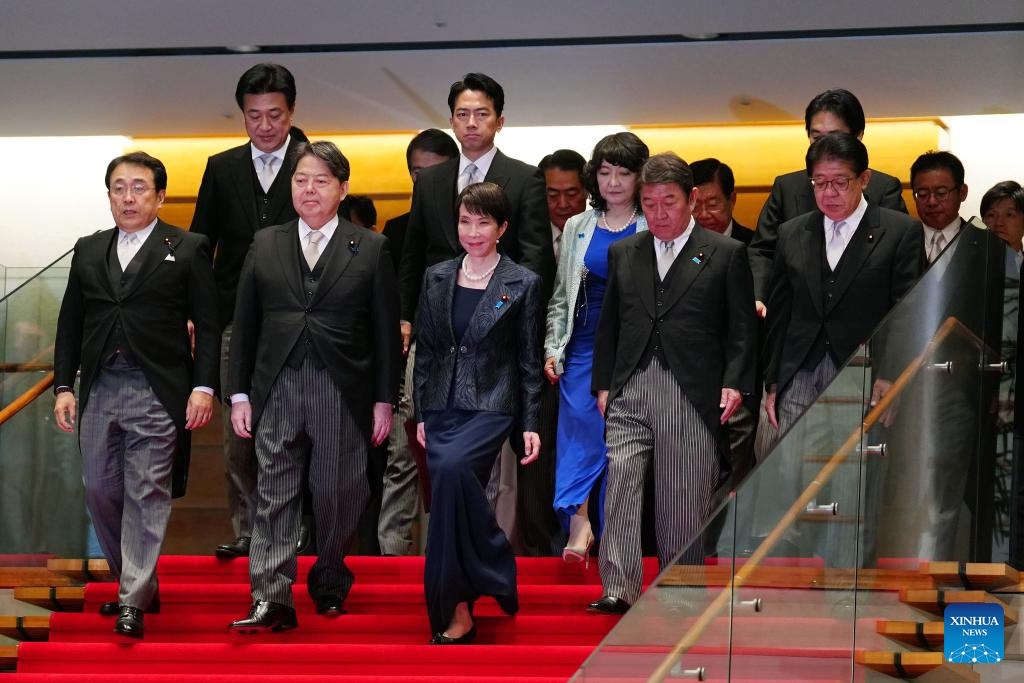
Although Takaichi is not known primarily as a business entrepreneur, her educational background in business administration and her early exposure to U.S. Congress and policy work gave her a business-minded understanding of governance and economic policy. Her role as Minister of Economic Security reflects a bridging of business, technology and national policy (especially supply-chain security) rather than pure private-sector leadership.
Her political persona: A conservative, nationalist figure aligned with the late Prime Minister Shinzo Abe and his economic-national security agenda. She often references British former Prime Minister Margaret Thatcher as an influence.
Foreign-Policy Orientation
Takaichi's foreign-policy priorities reflect her national-security and economic-security focus:
Stronger ties with the U.S., especially in the Indo-Pacific, and deeper cooperation on defence and supply-chain resilience.
A hawkish stance toward China, increased emphasis on Taiwan (including references to a “quasi-security alliance” with Taiwan).
Advocacy for revising Japan’s pacifist post-war constitution to enable a more robust security posture.
On trade/economy diplomacy: protection of critical technologies, emphasis on economic security, supply-chain diversification.
These positions suggest Japan under Takaichi will be more assertive in geopolitics and more proactive in securing economic lifelines, rather than purely laissez-faire.
Economic Agenda & What It Means for Japan
Takaichi’s economic priorities combine elements of stimulus, structural reform, and security-oriented investment:
Continuation and evolution of “Abenomics” style policies: monetary easing, fiscal stimulus, structural reform.
Tax cuts and higher government spending are on the table, with an emphasis on boosting domestic demand and coping with rising cost-of-living pressures.
Emphasis on economic security: securing supply-chains for semiconductors, critical minerals, next-gen technology, and reducing dependency on adversarial jurisdictions.
Potential trade-offs: Japan’s public debt is very high, and aggressive fiscal expansion may raise concerns among investors.
For Japan’s economy, this means:
Potential short-term boost through government spending, tech investment, and domestic demand support.
Medium-term benefits from stronger technology and supply-chain resilience—companies aligned with these priorities may benefit significantly.
Risks: Geopolitical tensions (especially with China) may affect exports and investment; demographic headwinds (aging population) remain structural burdens; fiscal sustainability may come under strain.
Implications for the World Economy
Japan’s shift toward stronger defence and economic-security posture may encourage other tech-advanced countries to follow suit, reinforcing the trend of “decoupling” and diversified supply-chains.
Japanese corporates in sectors such as semiconductors, advanced materials, renewables, defence equipment, and robotics stand to gain from policy tailwinds.
On the flip side, countries that depend heavily on Japanese capital, or whose exports rely on Japanese demand, will benefit if Takaichi’s stimulus leads to stronger growth in Japan.
Regional dynamics: Stronger Japan–U.S. alignment may shift the balance in the Indo-Pacific, impacting China, South Korea, Southeast Asia and supply-chain flows globally.
Global inflation & debt environment: If Japan increases spending and reduces savings, this could modestly contribute to global inflationary pressure or push interest rate expectations higher in Asia.
What to Expect into Early 2026
Here are some of the key themes and possible momentum for Japan (and the world) heading into early 2026 under Takaichi’s leadership:
Stimulus & Investment Surge – Expect announcements of major domestic investment programs in technology, infrastructure (especially resilience, digital, green) and security-related industries. This could boost Japanese corporate earnings, attract foreign investment into Japan, and set new standards for industrial policy.
Supply-Chain Diversification Accelerates – Japanese firms may expedite relocation or diversification of manufacturing away from China, strengthening links with Southeast Asia, India and North America. This shift will reshape regional trade patterns.
Stronger Defence & Security Cooperation – Japan will deepen security alliances (especially with U.S., Australia, India) and possibly take on new defence roles. This has bearings for procurement and defence-equipment firms internationally.
Geopolitical Repercussions – Takaichi’s tougher stance on China/Taiwan, combined with constitutional revisions, may provoke more geopolitical friction. Export-heavy Japanese industries may face headwinds if tensions disrupt trade.
Domestic Challenges & Reform Pressure – While enthusiasm may be high, Takaichi will still face structural challenges: aging society, low productivity sectors, social reforms. How she handles labour markets, immigration, female participation in workforce will be scrutinised.
Global Economic Spill-Overs – If Japan manages a growth uptick, it could modestly lift regional economies (ASEAN, Korea, Australia) via increased demand and investment. Conversely, missteps (e.g., fiscal fatigue or global trade backlash) could dampen momentum.
By early 2026, we could see a renewed growth narrative for Japan, underpinned by technology, stimulus and geopolitical repositioning. If successful, Japan might become a key growth-engine in Asia again — though much depends on external risks and internal reform pace.

Conclusion
Sanae Takaichi’s ascendancy to the premiership signals both continuity and change for Japan: continuity in the broad contours of the conservative, growth-and-security agenda that defined recent decades; change in the form of Japan’s first woman in the top role and a possible shift toward more assertive international economic and security policy. For the Japanese economy, there are promising signs of investment and stimulus, yet serious structural and external risks remain. Globally, Japan under Takaichi could become an even more active player in technology, supply-chain resilience and regional security, with ripple effects across the world economy. How she and her team navigate 2026 will matter — not just for Japan, but for the regional and global economic landscape.