Nvidia Tumbles, Alphabet Surges: How the Google–Meta AI Chip Talks Are Reshaping the AI Hardware Race
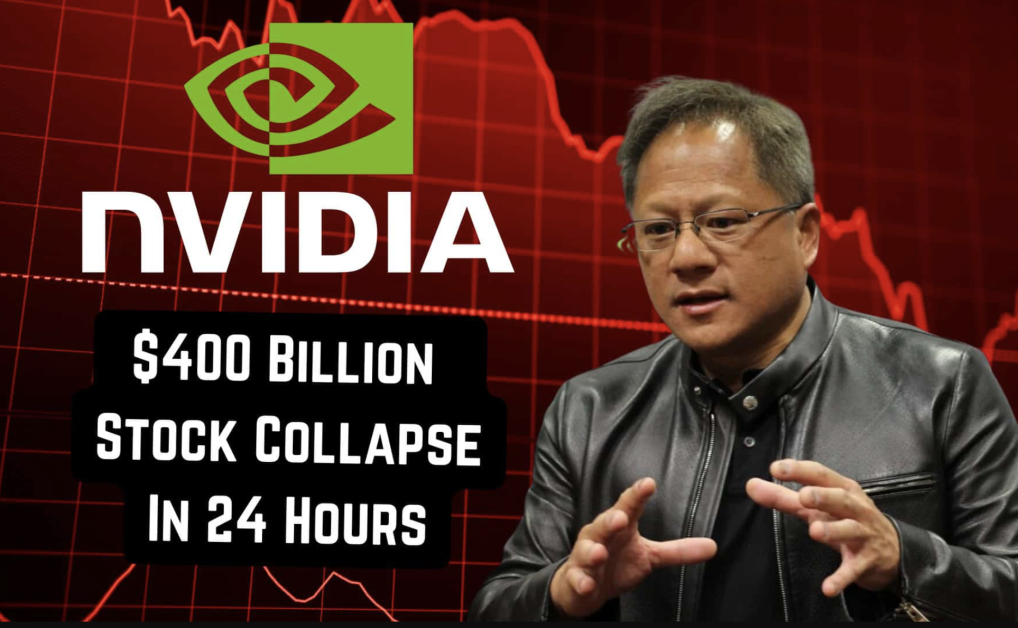
Meanwhile, Alphabet shares rose about 2–3% on the news, as markets reacted to the potential validation of Google’s push into AI hardware.
In short: investors are recalibrating around a possible shift in AI infrastructure sourcing — and the ripple effect is being felt acutely across the tech sector.
Why the Market Reacted: Is This Just Noise or the Start of a Trend?
What the Chip Talks Mean
1.For years, Nvidia’s GPUs have been the go-to hardware for AI workloads — data training, inference, large language models, etc. Their versatility made “GPU-first” infrastructure almost a given.
2.Now, with Google offering TPUs — purpose-built chips for AI workloads — and possibly selling or leasing them to external clients (rather than keeping exclusively in-house), the dynamics may change.
3.If Meta (one of the largest AI/data-center spenders globally) adopts TPUs, it could divert a significant chunk of its future AI infrastructure budget away from GPUs. Some estimates suggest this could cut into up to 10% of Nvidia’s annual data-center revenue.
What’s Fueling the Sell-off
a) The possibility of losing major clients like Meta — even if nothing is finalized — is enough to spook investors, because so much of Nvidia’s value depends on recurring large-scale orders for AI infrastructure.
b) The broader AI-hardware competition is heating up. As alternatives — especially more specialized or energy-efficient chips — become viable, the premium once enjoyed by GPUs comes under pressure.
c) Market sentiment toward “AI hype” is increasingly valuation-sensitive. Any hint that the “default GPU” narrative might fracture tends to trigger rapid revaluation.
What This Could Mean for the Global Market & Tech Landscape
Diversification of AI infrastructure suppliers: If big players start mixing and matching hardware (TPUs, GPUs, perhaps other accelerators), the previously GPU-dominated supply chain may become more fragmented. That could drive down compute costs and open the door for more companies to deploy AI.
Downward pressure on GPU-centric valuations: Companies heavily tied to GPU sales — beyond Nvidia, even supply-chain and ancillary tech firms — may see greater volatility or downward adjustments, as investors digest shifting demand patterns.
Acceleration of “multi-architecture” AI strategies: Firms might increasingly adopt a hybrid approach: GPUs for flexibility + specialized chips (TPUs or others) for efficiency or scale. That could shape how AI data centers are built globally.
Winners beyond Google / Nvidia: Cloud providers, chip designers, and even emerging players might all benefit if the market opens up to more competition. This could spur innovation in chip design, energy efficiency, and AI infrastructure architecture.
In a way, the shake-up challenges the assumption that AI infrastructure is a “winner-takes-all” world — we may be entering an era of hardware pluralism.
Will Companies Dependent on Nvidia Shift — And Can Nvidia Bounce Back?

Why Some Might Shift
1.Cost efficiency: TPUs (or other specialized chips) may offer better price/performance or energy/performance for large, stable workloads. That appeals to companies running massive AI inference or data-center operations at scale.
2. Strategic independence: Firms may want to avoid vendor lock-in. Relying solely on GPUs from Nvidia could be seen as risky; diversification gives leverage and negotiating power.
3. Custom needs & specialization: For certain AI workloads — especially those optimized for inference or large language model deployment — purpose-built chips might be more efficient than general-purpose GPUs.
How Nvidia Could Respond / Bounce Back
Emphasize flexibility and versatility: GPUs remain unmatched in versatility — they are not just for AI inference but for training, research, graphics, and workloads that evolve unpredictably. Nvidia can leverage that to stay relevant.
Innovate on next-gen hardware / software: By improving efficiency, lowering costs, and enhancing software support (e.g., better frameworks, compatibility), Nvidia can maintain its edge.
Expand ecosystem & partnerships: Nvidia could deepen collaborations with cloud providers, AI platforms, and enterprises to fortify its market position, even if some clients explore alternative chips.
Diversify offerings: Beyond GPUs, Nvidia might push networking, data-center infrastructure, edge AI, and other verticals to reduce dependence on pure chip sales.
Given Nvidia’s financial strength, existing dominance, and ecosystem — a full collapse seems unlikely. But the road ahead may be more competitive and turbulent than the recent GPU-golden era.
Why This Moment Matters
This isn’t just another quarterly stock blip. The developments reflect a structural shift in how AI infrastructure may be sourced, deployed, and scaled worldwide. As firms rethink their chip strategies, the ripple effects could touch hardware design, cloud computing business models, AI deployment economics, and even the pace of global AI adoption.
For readers and businesses watching the AI wave, this could mark the start of a more diversified, competitive, and possibly more affordable AI hardware market.