BYD’s 50-Square-Mile Mega Factory: Inside the Future of Autonomous, AI-Driven Manufacturing
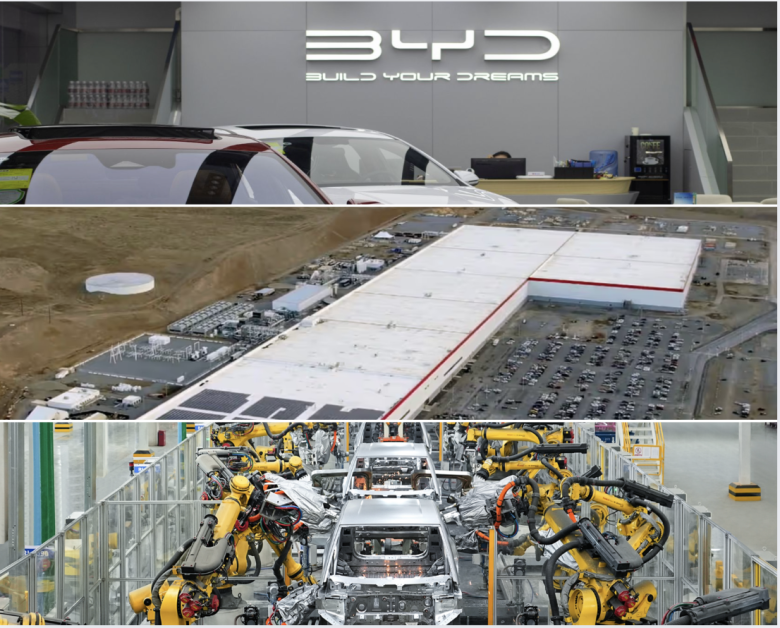
BYD’s 50-Square-Mile Mega Factory: The Future of Autonomous Manufacturing Has Begun
The factory of the future isn’t coming — it’s already under construction.
And BYD is building one so massive that it could reshape the very definition of industrial manufacturing.
Imagine a single production ecosystem bigger than the entire city of San Francisco.
Reports suggest the new BYD facility will stretch across roughly 50 square miles, forming one of the largest industrial footprints ever planned. It’s a structure so large, it doesn’t just produce goods — it redefines how an entire region functions.
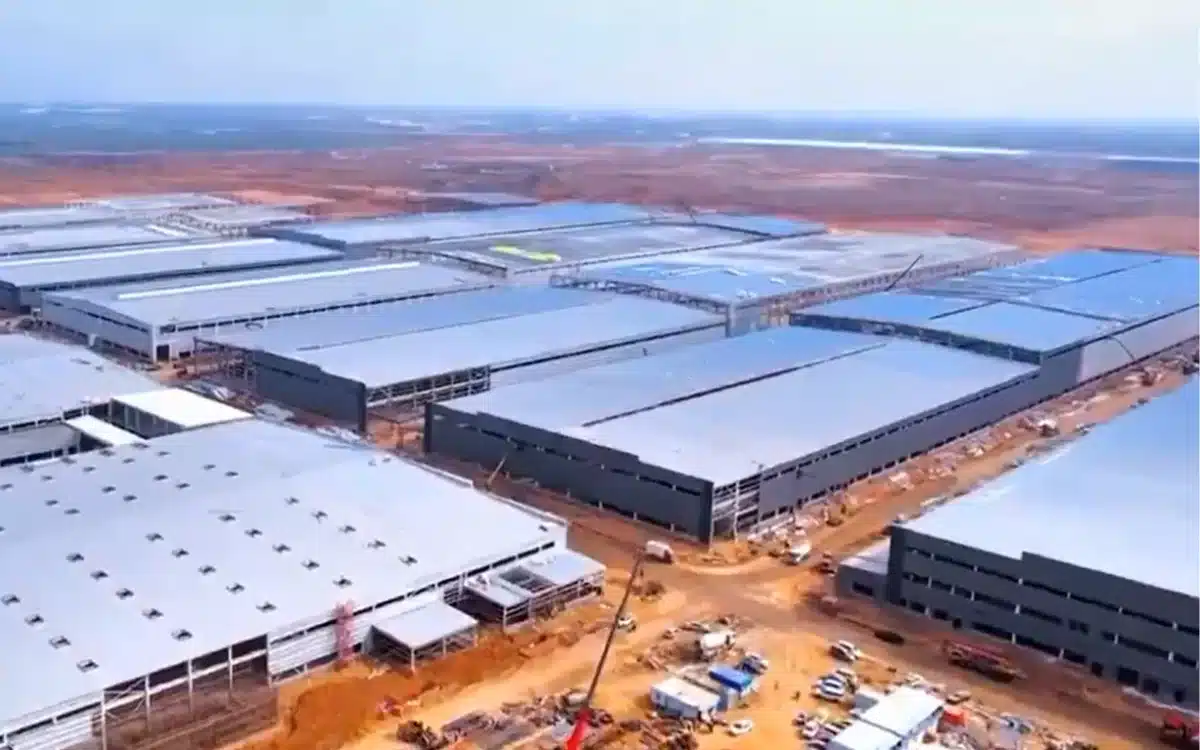
This isn’t simply manufacturing at scale.
It’s the beginning of a new industrial era where factories behave like operating systems — self-sustaining, interconnected, and powered heavily by automation and AI.
A Factory That Eliminates Bottlenecks
In traditional manufacturing, delays happen because different components — suppliers, logistics, energy, assembly — sit in different places, each with their own constraints.
But when everything is built inside one unified environment, the bottlenecks disappear.
Inside BYD’s mega ecosystem, nearly every major industrial activity is integrated:
• Production lines
• Component and part manufacturing
• Battery assembly
• Robotic automation
• Logistics and warehousing
• Energy systems and testing
• Long-term storage
The entire environment becomes a closed-loop, always-on manufacturing organism.
Efficiency isn’t added — it’s engineered into the architecture itself.
The Rise of Dark Factories
BYD’s ambitions tie directly into the global push toward dark factories — ultra-automated spaces where robotic systems handle nearly every workflow.
No lights.
No breaks.
No human presence unless absolutely necessary.
While the concept may sound dystopian, it represents the next evolutionary layer of industrial automation. As AI, robotics, and advanced vision systems mature, manufacturers aim to reduce human labor in high-risk, repetitive, or precision-based environments.
Dark factories offer:
a. 24/7 continuous production
b. Dramatically reduced error margins
c. Lower energy costs
d. Minimal downtime
c. Higher safety and consistency
BYD is working to integrate this automation-first approach into its new manufacturing ecosystem, making it a model for future gigafactories worldwide.
A Shift From Chains to Ecosystems

For decades, manufacturing relied on long supply chains — thousands of vendors, global shipping, and fragmented workflows.
But BYD’s blueprint marks a fundamental shift:
from supply chain → to self-contained industrial ecosystem.
This system works like a massive, synchronized operating loop:
• Inputs are processed internally
• Outputs move immediately to the next stage
• AI dynamically adjusts production speed
• Robotics execute workflows with precision
• Energy consumption self-balances
• Logistics are coordinated in real-time
It’s cleaner.
It’s faster.
It’s exponentially more autonomous.
And it signals where the entire manufacturing sector is heading.
Factories That Behave Like Software
The most groundbreaking part of BYD’s mega factory isn’t its size — it’s the intelligence behind it.
Factories are beginning to behave like large-scale operating systems:
• Self-optimizing
• Self-diagnosing
• Self-healing
• Self-balancing
Instead of workers managing machines, machines manage workflows, with humans acting as supervisors and problem-solvers, not operators. Automation isn’t a layer — it’s the foundation.
This is the architecture that will define the next industrial revolution.
What Comes After Earth-Bound Factories?
If a factory can cover 50 square miles… what’s next?
We’re quickly approaching an era where manufacturing may no longer need to remain on the planet. As robotics, AI, modular engineering, and energy systems advance, the idea of off-world manufacturing stops being science fiction and starts becoming long-term strategy.
Think:
a. Orbital assembly yards
b. Lunar mining stations
c. Zero-gravity manufacturing labs
d. Autonomous space factories
BYD’s colossal project is not just a factory — it’s a blueprint for what industrial environments could evolve into.
The Big Question
When factories become ecosystems…
When automation becomes the default layer…
When size is limited only by imagination…
What does the final version of a factory look like?
Maybe the next revolution won’t just change the world —
maybe it leaves the world entirely.
You may Also Like

The Billion-Dollar AI Battle Behind Silicon Valley

Samsung Becomes South Korea’s First $1 Trillion Company: How AI, HBM Chips & Galaxy Devices Fueled Its Historic Rise